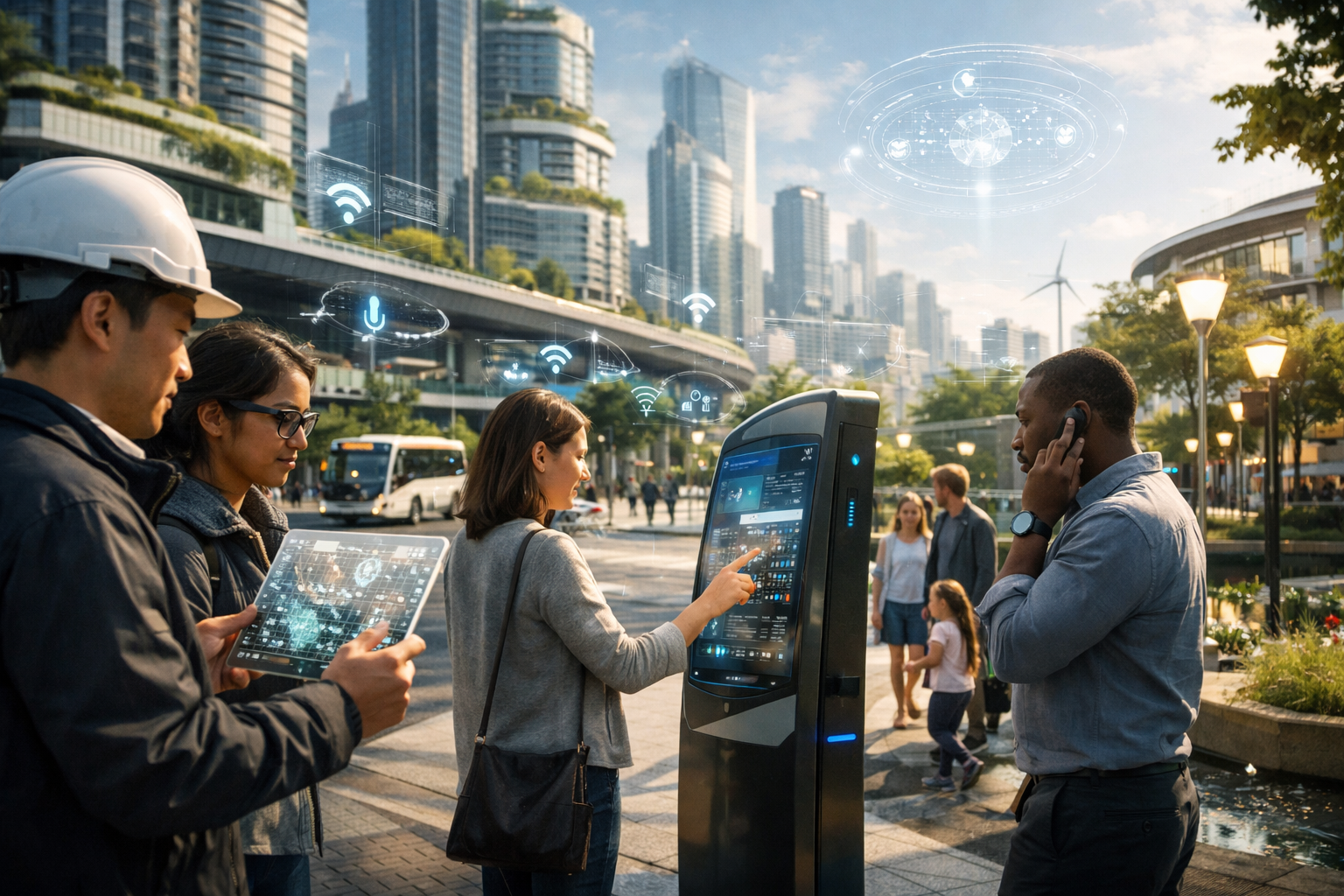
Cities around the world are growing faster than ever. As populations increase, urban areas face rising pressure on infrastructure, transportation, energy, and public services. To address these challenges, governments and organizations are turning to smart cities powered by IoT and connected technology.
Smart cities use data, connectivity, and automation to improve how cities operate and how people live. This article explains what smart cities are, how IoT enables them, and why connected technology plays a critical role in building more efficient, sustainable, and livable urban environments.
What Is a Smart City?
A smart city is an urban area that uses digital technology, IoT devices, and data-driven systems to improve city services and resource management. Instead of relying solely on manual processes, smart cities collect real-time data and use it to make informed decisions.
To better understand how urban systems become intelligent, it helps to review what a smart city is and how digital technology improves city services.
In simple terms, a smart city connects physical infrastructure—such as roads, buildings, utilities, and public spaces—to digital systems. As a result, city leaders gain better visibility into operations and can respond faster to changing conditions.
Although technology drives smart cities, the primary goal remains improving quality of life for residents.
The Role of IoT in Smart Cities
IoT forms the foundation of smart city systems. Sensors, devices, and connected platforms collect data across the city and share it through secure networks.
For example, sensors monitor traffic flow, air quality, noise levels, water usage, and energy consumption. Once collected, this data is analyzed to optimize services and reduce waste.
Because IoT devices operate continuously, cities gain real-time insights rather than relying on delayed reports. Therefore, city systems become more responsive, adaptive, and efficient.
Connected Infrastructure and Urban Systems
Smart cities rely on connected infrastructure to function effectively. Roads, bridges, buildings, and utilities all play a role in urban life, and IoT technology allows cities to monitor these assets in real time.
Connected streetlights adjust brightness based on traffic or weather conditions. Smart meters track electricity and water usage accurately. Structural sensors detect wear and stress in bridges and buildings.
By connecting infrastructure to digital systems, cities reduce maintenance costs and prevent failures before they occur.
Smart Transportation and Mobility
Transportation represents one of the most visible applications of smart city technology. Traffic congestion, pollution, and road safety remain major challenges in urban areas.
Smart transportation systems use IoT sensors, cameras, and data analytics to manage traffic flow dynamically. Traffic signals adjust timing based on real-time congestion, reducing delays and emissions.
Public transportation systems also benefit from connected technology. Buses and trains share location data, allowing passengers to receive accurate arrival times. Meanwhile, city planners analyze usage patterns to optimize routes and schedules.
As a result, smart mobility improves efficiency while reducing environmental impact.
Energy Management and Sustainability
Energy consumption plays a major role in urban sustainability. Smart cities use connected technology to monitor and manage energy usage more effectively.
Smart grids balance electricity demand and supply in real time. Sensors detect outages quickly, allowing faster restoration of services. Renewable energy sources integrate more smoothly through data-driven management.
In addition, smart buildings use automation to reduce energy waste. Heating, cooling, and lighting systems adjust automatically based on occupancy and environmental conditions.
Consequently, smart cities reduce costs and lower carbon emissions.
Smart Water and Waste Management
Water and waste systems often operate behind the scenes, yet they are critical to city health and sustainability.
Smart water systems use sensors to detect leaks, monitor pressure, and measure consumption. By identifying problems early, cities reduce water loss and maintenance expenses.
Similarly, smart waste management systems track bin levels and optimize collection routes. This approach reduces fuel consumption, lowers operational costs, and improves cleanliness.
Through connected technology, cities manage resources more responsibly and efficiently.
Public Safety and Emergency Response
Public safety represents another important smart city application. Connected systems help cities respond faster and more effectively to emergencies.
Surveillance cameras, environmental sensors, and connected communication platforms provide real-time situational awareness. Emergency services use this information to coordinate responses and allocate resources efficiently.
For example, smart fire detection systems identify hazards early, while connected traffic systems clear routes for emergency vehicles.
As a result, smart cities enhance safety while minimizing response times.
Data Platforms and Analytics in Smart Cities
IoT devices generate massive amounts of data. To turn this data into value, smart cities rely on centralized platforms and analytics systems.
Data platforms collect information from multiple sources and standardize it for analysis. Analytics tools then identify patterns, predict trends, and support decision-making.
In many cases, cities use dashboards to visualize performance metrics in real time. This visibility allows city leaders to monitor operations and adjust strategies proactively.
By combining data from different domains, cities gain a holistic view of urban performance.
Edge and Cloud Computing in Urban Environments
Smart cities use both edge and cloud computing to process data efficiently.
Edge computing handles time-sensitive tasks close to where data is generated. For example, traffic signals process sensor data locally to adjust signal timing instantly.
Cloud computing supports large-scale data storage, historical analysis, and advanced modeling. Together, edge and cloud systems create a balanced architecture.
This hybrid approach improves performance, scalability, and reliability across city systems.
Security and Privacy Considerations
Security and privacy remain critical concerns in smart cities. Because connected systems interact with physical infrastructure, vulnerabilities can have serious consequences.
Cities must protect IoT devices, networks, and data platforms from cyber threats. Strong authentication, encryption, and continuous monitoring reduce risks.
Privacy also requires careful attention. Smart city systems often collect sensitive data related to movement, behavior, or usage patterns. Transparent policies and responsible data governance help build public trust.
Without security and privacy, smart city initiatives cannot succeed.
Challenges in Building Smart Cities
Despite their benefits, smart cities face several challenges.
Interoperability remains a major issue. Devices and platforms from different vendors may not work together seamlessly. Standardization helps address this problem but requires coordination.
Funding and long-term planning also present obstacles. Smart city projects often require significant upfront investment, while benefits emerge gradually.
Additionally, cities must address digital inclusion to ensure all residents benefit from connected technology.
Overcoming these challenges requires collaboration between governments, technology providers, and communities.
The Future of Smart Cities
Smart cities continue to evolve as technology advances. Artificial intelligence enhances analytics and automation, allowing systems to predict issues before they occur.
Improved connectivity enables faster data exchange and more responsive services. Meanwhile, citizens increasingly participate through digital platforms and feedback systems.
In the future, smart cities will focus not only on efficiency but also on resilience, sustainability, and inclusivity.
Conclusion
Smart cities represent the convergence of IoT and connected technology with urban life. By using sensors, data platforms, and intelligent systems, cities improve transportation, energy management, public safety, and resource efficiency.
For beginners, smart cities demonstrate how IoT impacts daily life. For professionals, they offer complex systems that require thoughtful design, security, and governance.
As urban populations continue to grow, smart cities will play a vital role in creating more livable, efficient, and sustainable environments for the future.