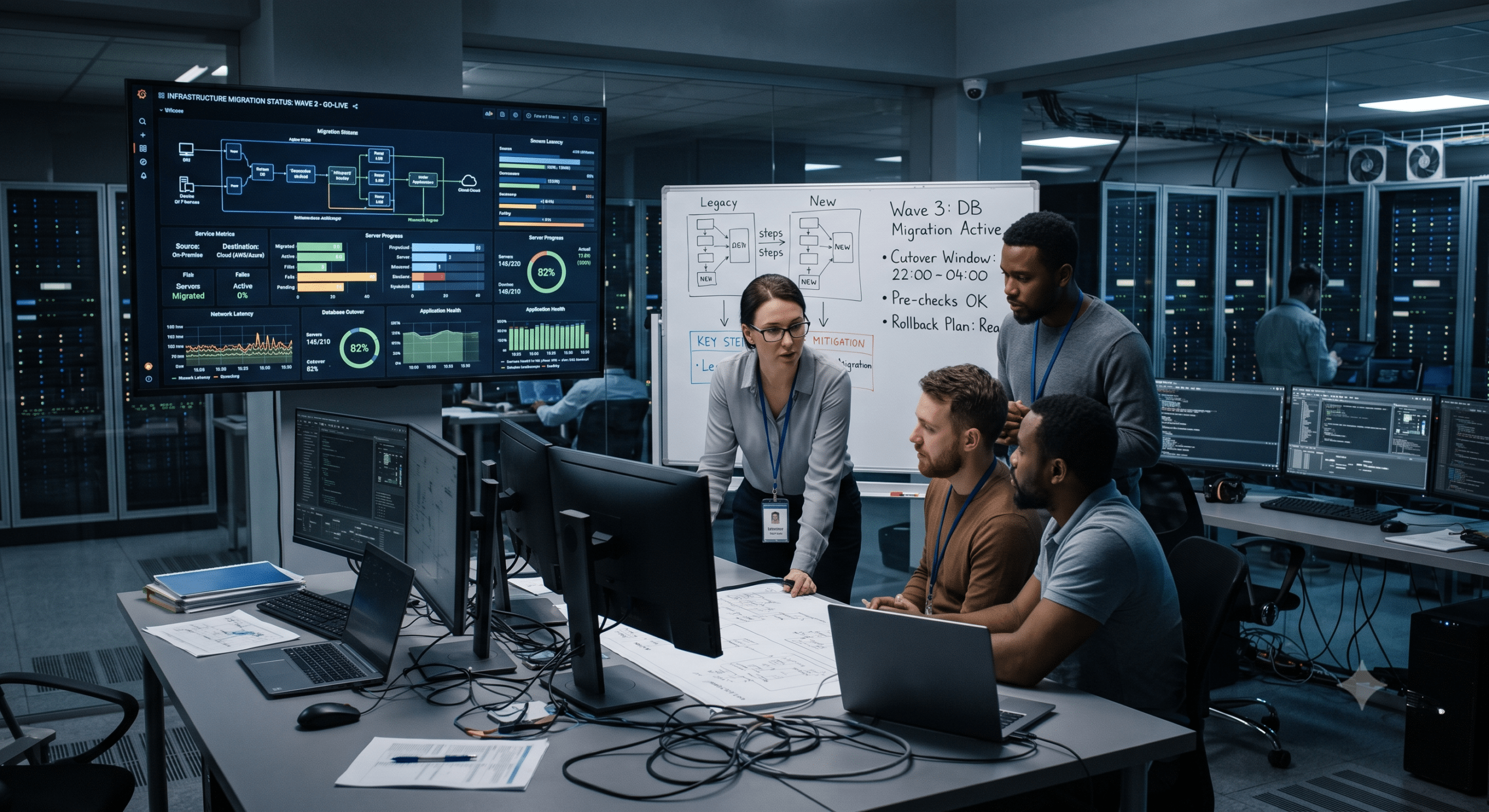
Cloud computing has reshaped how organizations build, deploy, and manage digital systems. At the core of this transformation is devops, a methodology that unifies development and operations to deliver faster, more reliable software and infrastructure. DevOps integrates development and operations into shared workflows that support continuous delivery and automation — see established DevOps best practices from Atlassian.
For IT professionals, understanding how DevOps strengthens cloud and infrastructure foundations is critical. This guide explains its principles, technical components, lifecycle, security integration, and best practices—without unnecessary complexity.
What Is DevOps?
Devops is a collaborative approach that integrates software development and IT operations into a shared workflow. Instead of treating coding and infrastructure management as separate functions, teams work together across the entire system lifecycle.
The primary goals include:
- Accelerating software delivery
- Increasing system reliability
- Automating repetitive processes
- Encouraging continuous feedback
- Improving collaboration
It is not a single tool or platform. Rather, it is a cultural and technical framework supported by automation technologies, cloud services, and monitoring systems.
Why It Matters in Cloud Infrastructure?
Modern cloud platforms such as Amazon Web Services, Microsoft Azure, and Google Cloud allow instant provisioning of infrastructure resources. Many organizations also rely on software delivery models explained in this comprehensive SaaS platforms guide to understand how applications are delivered over the cloud.
A unified development-operations model solves this by introducing automation and standardization.
Faster Deployment
Automated pipelines reduce manual errors and allow teams to release updates frequently and safely.
Scalable Architecture
Infrastructure resources can scale dynamically when managed through code-based provisioning.
Improved Stability
Continuous testing and monitoring ensure early detection of failures.
Better Cost Management
Automation supports efficient resource allocation, reducing waste in cloud spending.
Core Technical Pillars
To understand how cloud foundations benefit from modern engineering workflows, consider the following core pillars.
Infrastructure as Code (IaC)
Infrastructure as Code enables teams to define servers, networks, and storage through configuration files. Tools like Terraform and AWS CloudFormation automate cloud provisioning.
Benefits include:
- Version-controlled infrastructure
- Repeatable deployments
- Reduced configuration drift
- Faster recovery from failures
Infrastructure becomes programmable, predictable, and scalable.
Continuous Integration and Continuous Delivery (CI/CD)
CI/CD pipelines automate building, testing, and deployment tasks. Common tools include Jenkins, GitHub Actions, and GitLab.
Continuous Integration ensures code is frequently merged and tested.
Continuous Delivery ensures applications are always ready for release.
In cloud environments, pipelines can trigger automatic infrastructure updates alongside application deployments.
Containerization and Orchestration
Container technology packages applications and their dependencies into portable units. Docker simplifies this process.
For large-scale environments, Kubernetes manages container scheduling, scaling, and health monitoring.
Containers enhance:
- Portability across environments
- Efficient resource usage
- Rapid horizontal scaling
These capabilities are essential for cloud-native systems.
Monitoring and Observability
Continuous monitoring ensures infrastructure health and performance visibility. Tools such as Prometheus and Grafana provide actionable insights.
Monitoring allows teams to:
- Detect anomalies early
- Maintain performance standards
- Optimize workloads
- Reduce downtime
Observability supports proactive management rather than reactive troubleshooting.
Lifecycle in Cloud-Based Operations
Modern infrastructure management follows an iterative lifecycle:
- Plan – Define system requirements and architecture.
- Develop – Write application and infrastructure code.
- Build – Compile and package artifacts automatically.
- Test – Execute automated validation processes.
- Release – Prepare changes for deployment.
- Deploy – Launch applications and provision infrastructure.
- Operate – Maintain uptime and performance.
- Monitor – Analyze metrics for continuous improvement.
This cycle repeats continuously, ensuring steady progress and reduced risk.
Security Integration
Security is integrated directly into automated workflows rather than added at the end. This approach ensures protection throughout the lifecycle.
Key practices include:
- Automated vulnerability scanning
- Identity and access management enforcement
- Secure configuration templates
- Encryption of data
- Compliance checks within pipelines
Embedding security into automated processes reduces exposure while maintaining agility.
Cultural Foundations
Technology alone cannot transform infrastructure management. Organizational culture plays an equally important role.
Shared Ownership
Teams are collectively responsible for system performance and uptime.
Automation Mindset
Manual processes are replaced with scripts and reproducible pipelines.
Continuous Learning
Failures are treated as opportunities for improvement.
Transparent Metrics
Performance dashboards guide data-driven decisions.
A strong cultural foundation amplifies technical efficiency.
Common Challenges
Despite clear advantages, organizations may encounter obstacles:
- Skill gaps in automation and cloud technologies
- Tool complexity and integration issues
- Resistance to cultural change
- Compliance requirements in regulated industries
Strategic planning and phased implementation reduce these risks.
Best Practices for Strong Foundations
To build resilient cloud systems, consider the following recommendations:
- Start with automating repetitive operational tasks.
- Adopt Infrastructure as Code early in projects.
- Standardize CI/CD workflows across teams.
- Implement monitoring from day one.
- Encourage collaboration between development and operations.
- Maintain documentation and version control.
- Review metrics regularly to refine processes.
These practices create scalable and reliable infrastructure environments.
Emerging Trends
Cloud infrastructure continues to evolve rapidly. Key trends include:
- Serverless computing models
- Platform engineering teams
- AI-assisted automation
- GitOps methodologies
- Policy as code frameworks
- Advanced observability solutions
As distributed systems grow more complex, automated collaboration models remain central to operational success.
Conclusion
Devops remains a foundational approach within cloud and infrastructure technology. By aligning development and operations, organizations achieve faster delivery, stronger reliability, and scalable systems.
For intermediate professionals, mastering these principles enhances the ability to design resilient architectures, automate infrastructure, and maintain secure cloud environments. With structured workflows, automation, and shared accountability, modern IT teams can support continuous innovation while maintaining operational excellence.
A strong cloud foundation is no longer built through manual processes—it is built through collaboration, automation, and continuous improvement.