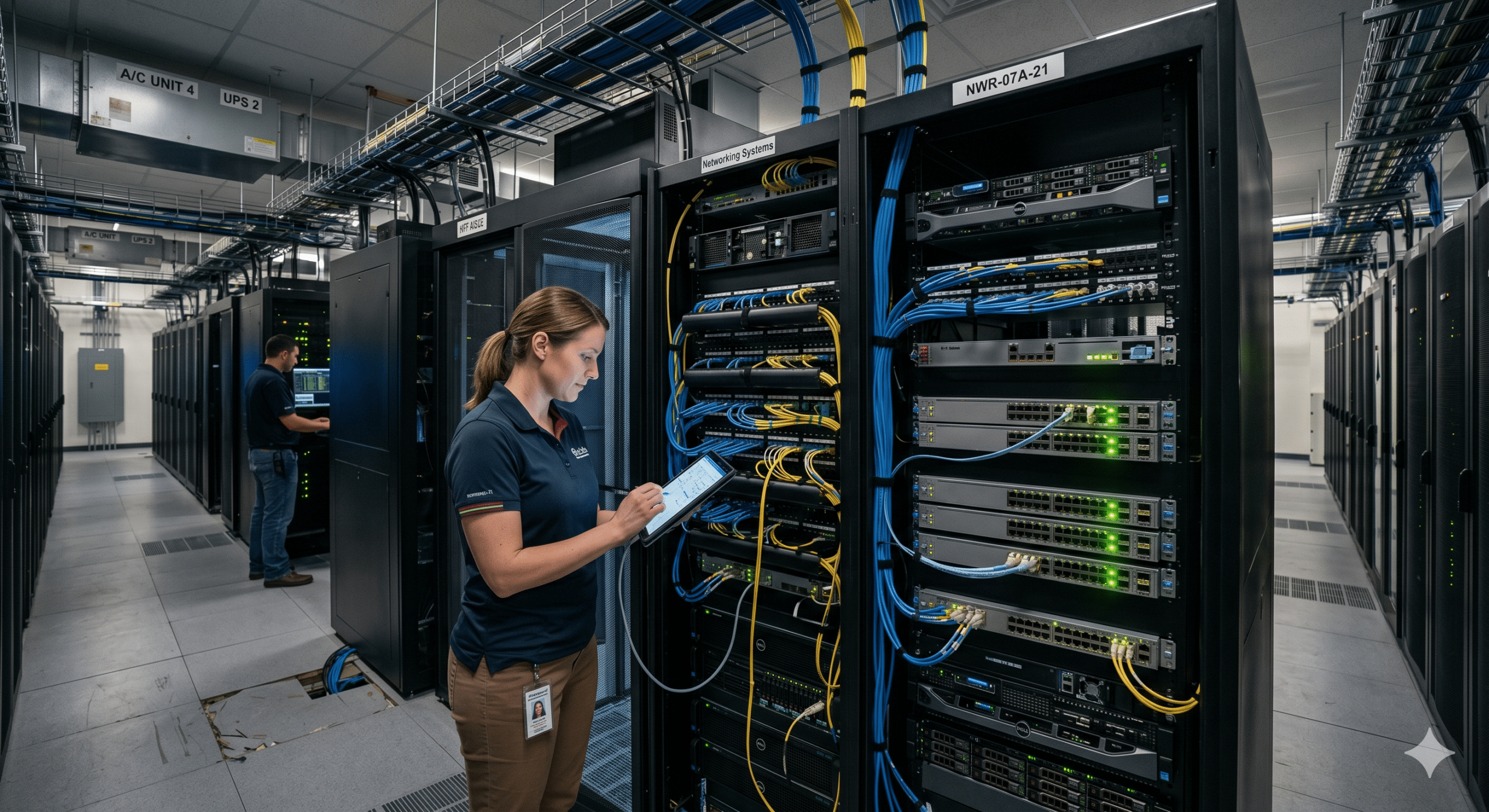
Every business today runs on one thing that people rarely think about until it breaks: networking systems.
It does not matter whether it is a hospital, school, online store, government office, BPO company, bank, or even a small coffee shop using cloud-based payment terminals. Behind every email sent, video meeting launched, database accessed, and customer transaction completed is a hardware and infrastructure backbone quietly doing the heavy lifting.
After spending years working around server rooms, switch racks, fiber cabinets, data centers, and chaotic troubleshooting calls at 2 AM, one thing becomes very clear: networking systems are no longer “just IT.” They are business survival systems.
The funny part is that most people only notice the network when something stops working. Suddenly the internet is “slow,” printers disappear, applications time out, remote employees cannot connect, and executives start asking why operations are frozen. In reality, those problems usually begin long before users ever notice them. Tiny issues inside hardware infrastructure slowly build up until the network reaches a breaking point.
That is why modern hardware and infrastructure systems matter more than ever.
This article breaks down networking systems in a practical, easy-to-understand way without drowning everything in confusing technical jargon. Whether you are a business owner, IT student, tech enthusiast, or someone trying to understand how modern infrastructure works behind the scenes, this guide explains the real-world side of enterprise networking from a systems and network engineering perspective.
Why Networking Systems Are the Foundation of Modern Infrastructure
Most people imagine networking systems as Wi-Fi routers and blinking lights in an office corner. In reality, enterprise networking is much bigger than that.
A networking system is the complete ecosystem that allows devices, servers, applications, cloud platforms, and users to communicate reliably and securely. According to Cloudflare, enterprise networks connect local offices, cloud services, data centers, devices, and users through interconnected LANs, WANs, and cloud environments. (Cloudflare)
Think of it like a city transportation system.
Roads represent cables and wireless links. Traffic lights behave like switches and routers directing data. Security checkpoints act like firewalls. Data centers operate like industrial hubs processing massive amounts of information. If one part fails, traffic slows everywhere.
Modern businesses depend heavily on networking systems because nearly everything now relies on real-time connectivity. Cloud computing, Microsoft 365, Zoom calls, ERP platforms, security cameras, VoIP phones, AI workloads, remote work environments, and IoT devices all share the same infrastructure.
The problem is that many organizations still underestimate how critical networking hardware really is.
I have personally seen companies spend millions on software platforms while ignoring aging switches running on decade-old firmware. Others invest in powerful servers but still use poorly designed cabling layouts that create bottlenecks nobody notices until expansion begins.
A strong infrastructure is not built by accident. It requires planning, scalability, redundancy, and constant monitoring.
The Core Hardware Behind Networking Systems
At the center of every networking system is physical hardware. Software may control modern environments, but hardware still carries the load.
Routers
Routers are traffic managers. Their job is to move data between different networks.
When someone in an office accesses a website, the router determines the best path for that request. Enterprise routers also handle VPN connectivity, WAN optimization, internet failover, and traffic prioritization.
In smaller businesses, one router may handle everything. In enterprise environments, there are often multiple redundant routers ensuring continuous uptime.
One common mistake companies make is underestimating router capacity. A cheap consumer-grade router may work for ten employees but completely collapse under hundreds of simultaneous cloud connections and video meetings.
Switches
Switches are the real workhorses inside networking systems.
Every workstation, server, access point, security camera, and VoIP phone usually connects through switches. They move traffic internally across the network.
Managed enterprise switches offer advanced capabilities like:
- VLAN segmentation
- Traffic prioritization
- Link aggregation
- Redundancy protocols
- Security enforcement
- Power over Ethernet (PoE)
From experience, switches are often where network stability either succeeds or fails. A badly configured switch can create loops, broadcast storms, and massive outages within seconds.
One of the smartest infrastructure investments a company can make is high-quality switching hardware with proper lifecycle management.
Firewalls
A firewall is basically the security guard standing at the network entrance.
Modern firewalls do much more than simply block traffic. They inspect applications, detect threats, enforce policies, and filter malicious connections in real time.
Today’s networking systems face nonstop attacks ranging from ransomware attempts to credential theft and phishing campaigns. That is why modern infrastructure increasingly follows Zero Trust principles where every user and device must continuously prove legitimacy.
In real enterprise deployments, firewalls are now deeply integrated with identity management, cloud access, VPN systems, and endpoint protection.
Wireless Access Points
Wireless infrastructure has evolved dramatically.
Years ago, Wi-Fi was treated as a convenience. Today it is mission-critical infrastructure.
Modern offices rely heavily on wireless connectivity for laptops, mobile devices, conference systems, IoT sensors, and hybrid work environments. Poor wireless design creates dead zones, interference issues, and unstable connectivity.
A properly designed wireless deployment considers:
- User density
- Signal overlap
- Channel planning
- Building materials
- Roaming behavior
- Capacity requirements
One lesson learned from real deployments is this: adding more access points does not always improve Wi-Fi. Sometimes it actually creates worse interference.
Cabling and Fiber Infrastructure
People love discussing cloud platforms and AI automation, but networking systems still depend heavily on physical cabling.
Ethernet and fiber remain the backbone of reliable infrastructure. According to enterprise infrastructure discussions from Jones IT, choosing between Cat6, Cat6a, and fiber affects bandwidth, scalability, and long-term performance. (Jones IT)
Good cabling design matters more than most businesses realize.
I have walked into server rooms where unlabeled cables looked like spaghetti hanging from racks. Troubleshooting in environments like that becomes a nightmare.
Professional infrastructure design includes:
- Structured cabling
- Labeling standards
- Cable management
- Redundant pathways
- Fiber backbone planning
- Proper rack airflow
Clean infrastructure saves enormous amounts of time during outages and future expansions.
Data Centers: The Heart of Enterprise Networking Systems
A data center is where critical computing infrastructure lives.
Inside data centers you will typically find:
- Core switches
- Server clusters
- Storage arrays
- Firewalls
- Backup systems
- Power systems
- Cooling infrastructure
- Virtualization platforms
Years ago, most businesses relied entirely on on-premise data centers. Today many organizations use hybrid environments combining physical infrastructure with cloud platforms.
Even with cloud adoption growing rapidly, physical infrastructure still matters enormously. Somebody’s hardware is always running the cloud.
Modern networking systems must support massive east-west traffic inside data centers while maintaining security and redundancy.
This is where network architecture becomes extremely important.
Why Network Design Matters More Than Expensive Hardware
One of the biggest misconceptions in IT is believing expensive hardware automatically creates a good network.
It does not.
You can install premium enterprise hardware and still create an unstable environment if the design itself is flawed.
Good networking systems depend heavily on architecture.
According to enterprise networking research and best practices, modern enterprise networks increasingly use layered models separating access, distribution, and core functions for scalability and reliability. (MDPI)
In practical terms, strong network design focuses on:
- Segmentation
- Scalability
- Security
- Redundancy
- Performance
- Simplicity
- Monitoring
- Future growth
One real-world issue I constantly see is flat networks where everything exists on the same subnet. This creates security risks and broadcast congestion.
Proper segmentation using VLANs and routing boundaries helps isolate problems and improve performance.
For example:
- Guest Wi-Fi should never touch production systems.
- Security cameras should not share the same segment as finance servers.
- IoT devices should remain isolated.
- Management interfaces should have restricted access.
Simple design decisions like these dramatically improve security posture.
The Rise of Cloud and Hybrid Infrastructure
Networking systems have changed significantly because of cloud computing.
Traditional enterprise environments were built around centralized data centers. Modern environments are distributed across:
- Public cloud platforms
- SaaS applications
- Remote users
- Branch offices
- Edge locations
- Mobile devices
According to enterprise networking trends, modern infrastructure increasingly supports hybrid and multi-cloud architectures. (BMC Blogs)
This shift completely changed how networks operate.
Years ago, most traffic stayed inside office buildings. Today users connect directly to cloud applications from anywhere in the world.
As a result, networking systems now prioritize:
- Secure remote access
- Cloud optimization
- Identity-based security
- SD-WAN
- SASE frameworks
- Edge computing
The network perimeter no longer exists in the traditional sense.
Monitoring: The Most Underrated Part of Networking Systems
If there is one thing experienced engineers learn quickly, it is this:
You cannot fix what you cannot see.
Monitoring is absolutely critical.
According to TechTarget, network monitoring involves tracking metrics like latency, throughput, packet loss, and bandwidth usage to maintain network health. (TechTarget)
Unfortunately, many businesses only monitor whether devices are online. That is nowhere near enough.
Strong monitoring systems provide visibility into:
- Bandwidth spikes
- Interface errors
- Hardware failures
- Wireless interference
- CPU utilization
- Security anomalies
- Routing instability
- Temperature issues
Reddit discussions among networking professionals repeatedly emphasize the importance of monitoring, logging, and failover testing in enterprise environments. (Reddit)
Some of the best troubleshooting moments happen because monitoring tools reveal problems before users even notice them.
Redundancy: Because Hardware Eventually Fails
Every piece of hardware fails eventually.
That is not pessimism. It is reality.
Drives fail.
Power supplies die.
Switches crash.
Fiber links get damaged.
Cooling systems break.
Firmware bugs happen.
Strong networking systems are designed around failure tolerance.
This includes:
- Redundant internet providers
- Backup power systems
- Dual core switches
- Link aggregation
- High availability firewalls
- Clustered servers
- Replicated storage
The goal is not preventing failure forever. The goal is surviving failure without downtime.
One of the biggest differences between amateur and enterprise-grade infrastructure is redundancy planning.
Cybersecurity and Networking Systems Now Go Hand-in-Hand
Years ago, networking and security were often treated separately.
That no longer works.
Modern cyber threats specifically target infrastructure weaknesses. Poor segmentation, outdated firmware, insecure wireless configurations, and weak remote access controls create enormous risk.
Research on WPA2 Enterprise security highlights how incorrect wireless configuration can expose enterprise credentials and compromise entire environments. (arXiv)
Today’s networking systems must integrate security directly into architecture through:
- Multi-factor authentication
- Network access control
- Segmentation
- Zero Trust policies
- Endpoint validation
- Intrusion detection
- Secure DNS
- Encrypted traffic inspection
Security is no longer a separate appliance sitting beside the network. Security is now part of the network itself.
AI and Automation Are Changing Infrastructure Management
Networking systems are entering a major transformation phase.
AI-driven operations are becoming increasingly common in enterprise environments. According to recent infrastructure discussions, organizations are using AI for anomaly detection, performance optimization, automation, and predictive troubleshooting. (TechRadar)
This does not mean engineers are disappearing.
Instead, repetitive operational tasks are increasingly automated while engineers focus more on architecture, policy, and optimization.
Automation now helps with:
- Configuration deployment
- Traffic analysis
- Alert correlation
- Capacity planning
- Firmware management
- Threat detection
However, experienced engineers still play a critical role because networks remain unpredictable environments involving human behavior, legacy systems, and business priorities.
Common Networking Mistakes Businesses Still Make
Even today, many infrastructure problems come from preventable mistakes.
Ignoring Documentation
Undocumented environments become dangerous quickly.
Without diagrams, IP plans, and configuration records, troubleshooting turns into guesswork.
Using Consumer Hardware in Enterprise Environments
Home-grade routers and unmanaged switches are not designed for enterprise workloads.
They eventually become bottlenecks and security liabilities.
Skipping Firmware Updates
Old firmware introduces vulnerabilities and stability issues.
Routine lifecycle management matters.
Poor Wi-Fi Planning
Throwing access points randomly into ceilings rarely works well.
Wireless requires proper site planning and testing.
No Backup Internet Connectivity
Single ISP dependence creates unnecessary business risk.
Internet outages happen more often than many executives realize.
Weak Network Segmentation
Flat networks make security breaches spread much faster.
Segmentation limits damage during incidents.
The Future of Networking Systems
Networking systems are evolving rapidly because businesses themselves are changing.
The future includes:
- AI-assisted operations
- Edge computing
- Smart automation
- 5G integration
- Cloud-native networking
- Software-defined infrastructure
- Energy-efficient data centers
- Identity-driven access control
Infrastructure is becoming more intelligent, distributed, and adaptive.
At the same time, physical hardware still matters enormously.
Despite cloud growth, reliable networking systems still depend on high-quality switches, routers, structured cabling, redundant power, and well-designed infrastructure architecture.
Technology changes fast, but the fundamentals remain surprisingly consistent:
- Reliability matters
- Simplicity matters
- Visibility matters
- Security matters
- Scalability matters
The organizations that understand these fundamentals build networks that survive growth, cyber threats, outages, and future technological shifts.
Final Thoughts
Networking systems are one of the most important yet invisible parts of modern business operations.
When infrastructure is designed properly, nobody notices it. Everything simply works. Employees stay productive, applications remain responsive, and operations continue smoothly.
But behind that smooth experience is an enormous amount of engineering, planning, monitoring, and maintenance.
From physical cabling and enterprise switches to cloud networking and cybersecurity integration, hardware and infrastructure systems now form the digital backbone of nearly every industry on the planet.
The reality is simple: businesses no longer compete only on products or services. They also compete on infrastructure reliability.
A slow, unstable, insecure network affects customer experience, employee productivity, revenue, and business reputation.
That is why modern networking systems deserve far more attention than blinking lights in a server room.
They are the foundation holding the digital world together.
Frequently Asked Questions (FAQ)
What are networking systems?
Networking systems are interconnected hardware and software components that allow computers, servers, devices, and applications to communicate securely and efficiently across local and wide-area networks.
Why are networking systems important for businesses?
Networking systems support communication, cloud access, file sharing, cybersecurity, remote work, and business operations. Without reliable infrastructure, modern businesses cannot function effectively.
What hardware is commonly used in networking systems?
Common networking hardware includes:
- Routers
- Switches
- Firewalls
- Wireless access points
- Fiber infrastructure
- Servers
- Network storage devices
What is the difference between a router and a switch?
A router connects different networks together and directs internet traffic, while a switch connects devices within the same local network.
What is network segmentation?
Network segmentation divides networks into smaller sections for improved security, performance, and traffic management.
Why is redundancy important in networking systems?
Redundancy helps prevent downtime by providing backup systems and alternative network paths when hardware failures occur.
How does cloud computing affect networking systems?
Cloud computing shifts traffic patterns away from centralized offices toward distributed cloud platforms, requiring more secure and scalable infrastructure designs.
What role does cybersecurity play in networking systems?
Cybersecurity protects networking systems from unauthorized access, malware, ransomware, and data breaches through firewalls, segmentation, encryption, and monitoring.
Further Reading and References
- Cloudflare – What Is Enterprise Networking?
- TechTarget – Network Management Tasks and Best Practices
- BMC – Enterprise Networking Explained
- Meter – Enterprise Network Infrastructure Guide
- Siberoloji – Enterprise Network Design Best Practices
- IR – Enterprise Network Management Guide
- MDPI – Enterprise Networking Optimization Research