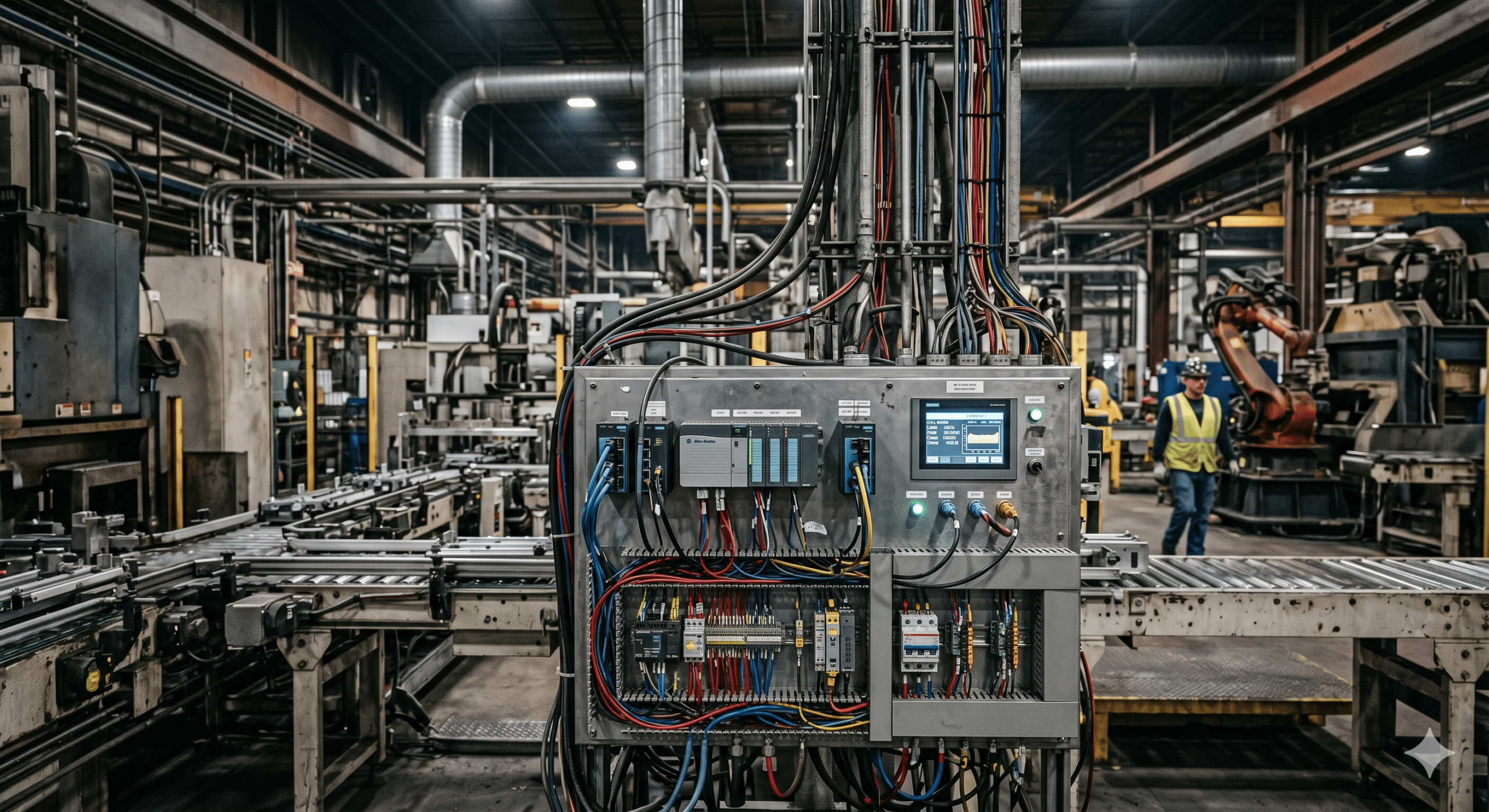
Most people rarely think about industrial hardware until something stops working.
When a factory suddenly shuts down, a warehouse loses connectivity, production slows unexpectedly, or automation systems fail during peak operations, attention immediately shifts toward the infrastructure behind the scenes. However, long before those failures happen, industrial hardware has already been quietly doing the heavy lifting every single day.
That is the reality of modern infrastructure systems.
As someone who has spent years observing industrial operations, facility workflows, production environments, maintenance planning, and infrastructure coordination, I’ve learned that successful operations are rarely built on flashy technology alone. Instead, they are built on dependable systems that continue performing consistently under pressure, heat, vibration, dust, and nonstop operational demand.
Because of this, industrial hardware has become one of the most critical foundations of modern industry.
Today, businesses rely heavily on interconnected systems that combine automation, networking, operational technology, data collection, machine control, power management, and digital monitoring. Consequently, industrial hardware no longer serves only as physical equipment inside a plant or facility. Instead, it now acts as the operational backbone that supports productivity, efficiency, safety, communication, and long-term business continuity.
At the same time, industrial environments continue becoming smarter and more connected. Industry 4.0 initiatives, industrial IoT deployments, edge computing systems, and automated production lines are rapidly transforming how facilities operate worldwide. However, none of those technologies can function properly without stable infrastructure underneath them.
That infrastructure starts with industrial hardware.
From rugged control systems and industrial computers to sensors, networking equipment, PLCs, power systems, and edge devices, every component contributes to operational reliability. Therefore, organizations that underestimate the importance of industrial hardware often face higher downtime costs, operational bottlenecks, maintenance challenges, and infrastructure instability later on.
In this article, we will explore how industrial hardware supports infrastructure systems, why reliability matters more than marketing trends, how modern industrial environments are evolving, and what organizations should prioritize when building resilient operational infrastructure.
Why Industrial Hardware Matters More Than Ever
A decade ago, industrial operations were much simpler than they are today. Machines operated more independently, production lines were less connected, and operational data moved slowly across facilities. In many cases, industrial systems focused mostly on mechanical performance rather than digital integration.
However, industrial environments have changed dramatically.
Today, machines communicate continuously while sensors monitor performance in real time. At the same time, automated systems coordinate production workflows while cloud platforms collect operational intelligence for analysis and forecasting. Meanwhile, predictive maintenance systems examine equipment behavior before failures even occur.
Because of this transformation, industrial hardware has become far more important than it was in the past.
Modern infrastructure systems now depend on constant communication between machines, software platforms, operational technology, and enterprise systems. Consequently, industrial hardware acts as the bridge connecting physical operations with digital intelligence.
For example, sensors collect operational data from machinery while PLCs and industrial controllers process decisions instantly. Meanwhile, industrial networking equipment transfers information between systems while edge computing devices analyze workloads locally before synchronizing with larger enterprise platforms.
Without dependable industrial hardware, these processes quickly become unstable.
Organizations often invest heavily in software platforms, analytics systems, cloud dashboards, and automation tools. However, if the physical infrastructure underneath those technologies lacks reliability, operations eventually experience downtime, communication failures, or production interruptions.
Therefore, industrial hardware is no longer just a support system. Instead, it has become a strategic business asset.
Industry 4.0 initiatives continue accelerating this trend across manufacturing, logistics, transportation, utilities, pharmaceuticals, mining, food processing, and energy sectors. As facilities become more automated and data-driven, the demand for reliable industrial infrastructure continues increasing worldwide.
According to industrial automation experts, connected operational systems now require stronger integration between automation hardware, industrial communication systems, and data infrastructure to maintain efficiency and operational visibility. (highbyte.com)
Understanding Industrial Hardware in Modern Infrastructure Systems
Many people assume industrial hardware only refers to large machines or heavy equipment. While machinery certainly plays an important role, industrial hardware actually includes a much broader range of operational infrastructure components.
In simple terms, industrial hardware includes the physical systems and devices that support industrial operations, automation, networking, monitoring, communication, safety, and production management.
These systems commonly include:
- Programmable Logic Controllers (PLCs)
- Industrial computers
- Industrial servers
- SCADA systems
- Human Machine Interfaces (HMIs)
- Sensors and actuators
- Industrial switches and routers
- Control panels
- Edge computing devices
- Industrial gateways
- Power supply systems
- Motor drives
- Safety controllers
- Communication infrastructure
Each component supports a different operational responsibility inside industrial environments.
For instance, sensors gather information such as pressure, temperature, vibration, humidity, and machine performance. Afterward, controllers analyze that information and trigger operational actions automatically. At the same time, industrial networking equipment transfers data between systems while edge devices process local workloads for faster decision-making.
Consequently, modern industrial operations function through continuous communication between hardware systems.
Industrial automation specialists consistently emphasize that infrastructure reliability depends heavily on how these hardware components interact together inside operational environments. (industrialautomationauthority.com)
Furthermore, industrial hardware must survive conditions that standard commercial equipment cannot tolerate. Heat, dust, moisture, vibration, electromagnetic interference, and nonstop operational cycles are all common inside industrial facilities.
Therefore, industrial hardware is specifically engineered for durability and long-term operational resilience.
The Difference Between Consumer Hardware and Industrial Hardware
One of the most expensive mistakes organizations make is assuming standard consumer hardware can survive industrial environments.
Initially, lower-cost commercial equipment may appear attractive from a budget perspective. However, industrial conditions quickly expose the limitations of consumer-grade systems.
Office hardware typically operates inside climate-controlled spaces with stable temperatures, minimal vibration, clean air, and predictable electrical conditions. Industrial facilities, on the other hand, expose equipment to extreme operational stress every day.
For example, production floors often contain airborne dust, fluctuating temperatures, vibration from heavy machinery, humidity, electrical interference, and continuous operating hours. Consequently, ordinary hardware usually experiences faster degradation in these environments.
Because of these challenges, industrial hardware is built differently.
Industrial systems commonly include rugged metal enclosures, fanless cooling systems, redundant power inputs, shock-resistant construction, and extended temperature tolerance. In addition, many industrial devices are designed for continuous operation twenty-four hours a day without interruption.
Consumer hardware prioritizes affordability and convenience. Industrial hardware, meanwhile, prioritizes reliability, operational continuity, and long-term stability.
That difference matters enormously in real-world operations.
For instance, if an office laptop fails, productivity slows temporarily. However, if an industrial controller fails during production, entire manufacturing lines may stop operating immediately. As a result, downtime costs can escalate within minutes depending on the facility.
Over the years, I’ve seen organizations attempt to save money by deploying low-cost commercial networking equipment inside production environments. At first, systems appeared stable. However, over time, heat exposure, dust accumulation, and unstable power conditions caused repeated failures.
Consequently, maintenance teams became overwhelmed while operational reliability steadily declined.
Eventually, the short-term savings disappeared completely because replacement costs, downtime, emergency repairs, and operational interruptions became far more expensive than the original investment.
Therefore, experienced industrial engineers usually prioritize lifecycle reliability over initial purchasing costs.
How Industrial Hardware Supports Infrastructure Systems
Modern industrial infrastructure systems rely heavily on hardware integration. Unlike older facilities where systems operated independently, today’s operations require constant coordination between machines, data systems, automation platforms, and operational technology environments.
Because of this evolution, industrial hardware now supports several critical operational functions simultaneously.
Automation and Process Control
Automation remains one of the biggest drivers of industrial hardware adoption worldwide.
PLCs, distributed control systems, industrial controllers, and automation hardware allow facilities to improve consistency, reduce human error, and increase operational efficiency. Furthermore, automation systems help organizations maintain predictable quality standards while reducing unnecessary production delays.
As industrial facilities continue expanding automation capabilities, hardware reliability becomes even more important.
Industrial automation experts consistently highlight the role of PLCs, sensors, and industrial control systems in maintaining stable production environments. (industrialautomationauthority.com)
Industrial Networking and Connectivity
Connectivity has become essential in modern infrastructure systems.
Machines, sensors, controllers, and enterprise platforms must communicate continuously in order to support real-time monitoring, operational visibility, predictive maintenance, and production coordination.
Consequently, industrial networking hardware has become one of the most important infrastructure investments organizations can make.
Industrial communication protocols now allow different operational systems to exchange information efficiently across complex environments. (advantech.com)
At the same time, industrial IoT deployments continue increasing demand for rugged switches, industrial routers, wireless infrastructure, and edge communication devices.
Power Stability and Operational Continuity
Power infrastructure is often overlooked until failures occur.
However, stable power systems are absolutely essential for protecting industrial operations from outages, voltage fluctuations, and equipment damage.
Industrial power infrastructure commonly includes:
- UPS systems
- Industrial power supplies
- Backup generators
- Surge protection systems
- Power monitoring devices
Without stable power systems, even the most advanced automation environments become vulnerable to operational disruption.
Therefore, power reliability remains one of the most important parts of industrial infrastructure planning.
Data Collection and Operational Intelligence
Modern industrial facilities generate enormous amounts of operational data every second.
Sensors continuously monitor machine conditions while controllers track production performance, equipment behavior, energy consumption, and operational efficiency.
Consequently, industrial hardware plays a major role in data collection and operational intelligence.
Industrial DataOps strategies are increasingly helping organizations improve visibility across infrastructure systems while supporting better decision-making. (highbyte.com)
Without proper infrastructure hardware, however, operational data often becomes fragmented, delayed, or difficult to analyze effectively.
Why Edge Computing Is Reshaping Industrial Hardware
One of the biggest shifts happening inside industrial environments today involves edge computing.
Traditionally, organizations relied heavily on centralized servers or cloud systems for processing workloads. However, industrial operations often require immediate decision-making with extremely low latency.
Because of this, edge computing infrastructure has become increasingly important.
Edge devices process operational data locally near the source rather than sending everything directly to distant cloud systems. Consequently, facilities gain faster response times, lower latency, and improved operational resilience.
For example:
- Safety systems require immediate response times.
- Robotic systems need real-time coordination.
- Predictive maintenance tools analyze machine behavior instantly.
- Automated inspection systems process visual data locally.
Therefore, edge infrastructure improves both operational efficiency and reliability.
Industrial IoT specialists continue emphasizing how edge computing reduces network dependency while strengthening real-time industrial operations.
From an industrial engineering perspective, this approach also improves business continuity because local systems can continue operating even during network interruptions.
Why Reliability Matters More Than Performance
Many organizations initially focus heavily on performance specifications when purchasing industrial hardware. Although processing power and speed are important, reliability ultimately matters far more in industrial environments.
After all, a powerful system that fails regularly becomes an operational risk rather than an operational advantage.
Industrial operations depend heavily on uptime because downtime directly impacts productivity, labor utilization, customer commitments, and profitability. Therefore, infrastructure reliability should always remain a top priority.
The best industrial hardware systems are usually not the flashiest systems available. Instead, they are the systems that continue operating consistently year after year without causing disruption.
Reliable infrastructure typically includes:
- Stable thermal performance
- Environmental durability
- Redundant communication systems
- Long-term lifecycle support
- Predictable maintenance planning
- Spare parts availability
- Strong vendor support
Unfortunately, many businesses still prioritize low upfront costs instead of long-term operational stability. However, that strategy often creates larger expenses later through downtime, maintenance problems, and infrastructure replacement.
Therefore, experienced industrial engineers almost always prioritize operational continuity over temporary savings.
Industrial Cybersecurity Is Now an Infrastructure Priority
Cybersecurity is no longer limited to office networks or enterprise software systems.
Today, industrial environments are increasingly connected to cloud platforms, remote monitoring systems, enterprise applications, and external vendor networks. Consequently, industrial infrastructure systems now face growing cybersecurity risks.
Industrial Control System security has become one of the biggest concerns across modern manufacturing and infrastructure environments. (legalclarity.org)
One of the most important cybersecurity practices involves separating IT networks from operational technology environments. (blog.aristacyber.io)
Industrial hardware now plays a major role in cybersecurity through:
- Industrial firewalls
- Secure communication gateways
- Segmented industrial switches
- Redundant networking systems
- Secure remote access infrastructure
- Network monitoring hardware
As industrial operations become more connected, cybersecurity must become part of infrastructure planning rather than an afterthought.
The Future of Industrial Hardware Systems
Industrial hardware continues evolving rapidly as organizations pursue smarter, more connected, and more efficient operations.
Several major trends are shaping the future of industrial infrastructure systems.
First, edge computing devices are becoming more intelligent and capable of supporting advanced analytics locally. At the same time, industrial AI integration continues expanding across predictive maintenance, automation, quality control, and operational optimization environments.
Meanwhile, industrial networking infrastructure is becoming faster and more resilient. Industrial wireless technologies continue improving flexibility across manufacturing plants, warehouses, and logistics facilities. (techradar.com)
In addition, sustainability and energy efficiency are becoming increasingly important. Many organizations now prioritize intelligent power management, energy optimization, and environmentally responsible infrastructure planning.
Furthermore, IT and operational technology systems continue converging across modern facilities. Consequently, future industrial hardware strategies will require even stronger coordination between infrastructure reliability, cybersecurity, automation, and operational scalability.
From an industrial engineering perspective, the long-term goal remains straightforward: build infrastructure systems capable of operating reliably under real operational conditions while supporting future technological growth.
Final Thoughts
Industrial hardware rarely receives public attention compared to AI, cloud computing, automation software, or advanced analytics platforms. However, none of those technologies can function properly without dependable infrastructure underneath them.
That infrastructure begins with industrial hardware.
Every smart factory, connected warehouse, automated production line, and industrial IoT deployment ultimately depends on physical systems operating reliably behind the scenes.
As industrial operations continue becoming more connected, automated, and data-driven, the importance of resilient infrastructure systems will only continue growing.
Organizations that invest in reliable industrial hardware, thoughtful infrastructure planning, cybersecurity readiness, and operational resilience will position themselves far more effectively for long-term success.
Because in industrial environments, success is rarely determined by flashy technology alone.
Instead, success is built on systems that continue working consistently when entire operations depend on them.
Frequently Asked Questions
What is industrial hardware?
Industrial hardware refers to the physical infrastructure systems and devices used in industrial environments for automation, communication, networking, monitoring, production management, and operational control.
Why is industrial hardware important?
Industrial hardware supports operational reliability, automation efficiency, safety, production continuity, communication systems, and infrastructure stability across industrial facilities.
What is the difference between industrial hardware and consumer hardware?
Industrial hardware is designed for harsh operational environments and continuous usage. It typically includes rugged construction, vibration resistance, thermal protection, redundant power systems, and long-term reliability features.
How does industrial hardware support Industry 4.0?
Industrial hardware enables real-time data collection, machine connectivity, automation, edge computing, industrial IoT communication, and operational intelligence within Industry 4.0 environments.
What are the biggest risks facing industrial infrastructure systems?
Common risks include hardware failure, network instability, cybersecurity threats, poor environmental planning, inadequate maintenance, power instability, and lack of scalability planning.
Why is edge computing important in industrial environments?
Edge computing allows industrial systems to process data locally for faster response times, reduced latency, improved operational reliability, and better continuity during network disruptions.
Further Reading and References
- Industrial Automation Authority – Core Hardware Components in Industrial Automation Systems
- HighByte – How Industrial DataOps Is Shaping Industry 4.0
- Advantech – Understanding Industrial Communication Protocols
- AWS Industries – Manufacturing OT Security Best Practices
- Arista Cyber – OT Security Best Practices