Artificial intelligence is transforming how businesses operate. From chatbots to predictive analytics, automation is becoming smarter and more capable. At the center of this transformation are AI agents — intelligent systems that can observe, decide, act, and improve with minimal human intervention.
If you are new to this topic, this beginner-friendly guide will explain everything clearly. You will learn what AI agents are, how they work, how they differ from traditional automation, and how businesses can use them successfully.
What Are AI Agents?
AI agents are intelligent software systems designed to interact with their environment, process information, and take actions to achieve specific goals. AI agents are intelligent software systems designed to interact with their environment, process information, and take actions to achieve specific goals. For a deeper technical explanation, you can review this detailed AI agent definition by IBM.
Unlike simple rule-based automation, these systems can:
- Analyze data in real time
- Make context-aware decisions
- Execute multi-step tasks
- Learn from outcomes
- Improve performance over time
Think of them as digital workers that can handle both repetitive tasks and decision-based processes.
The most important feature that separates AI agents from basic automation tools is autonomy. They do not simply follow fixed instructions. Instead, they adapt based on data and feedback.
How Intelligent Agents Work?
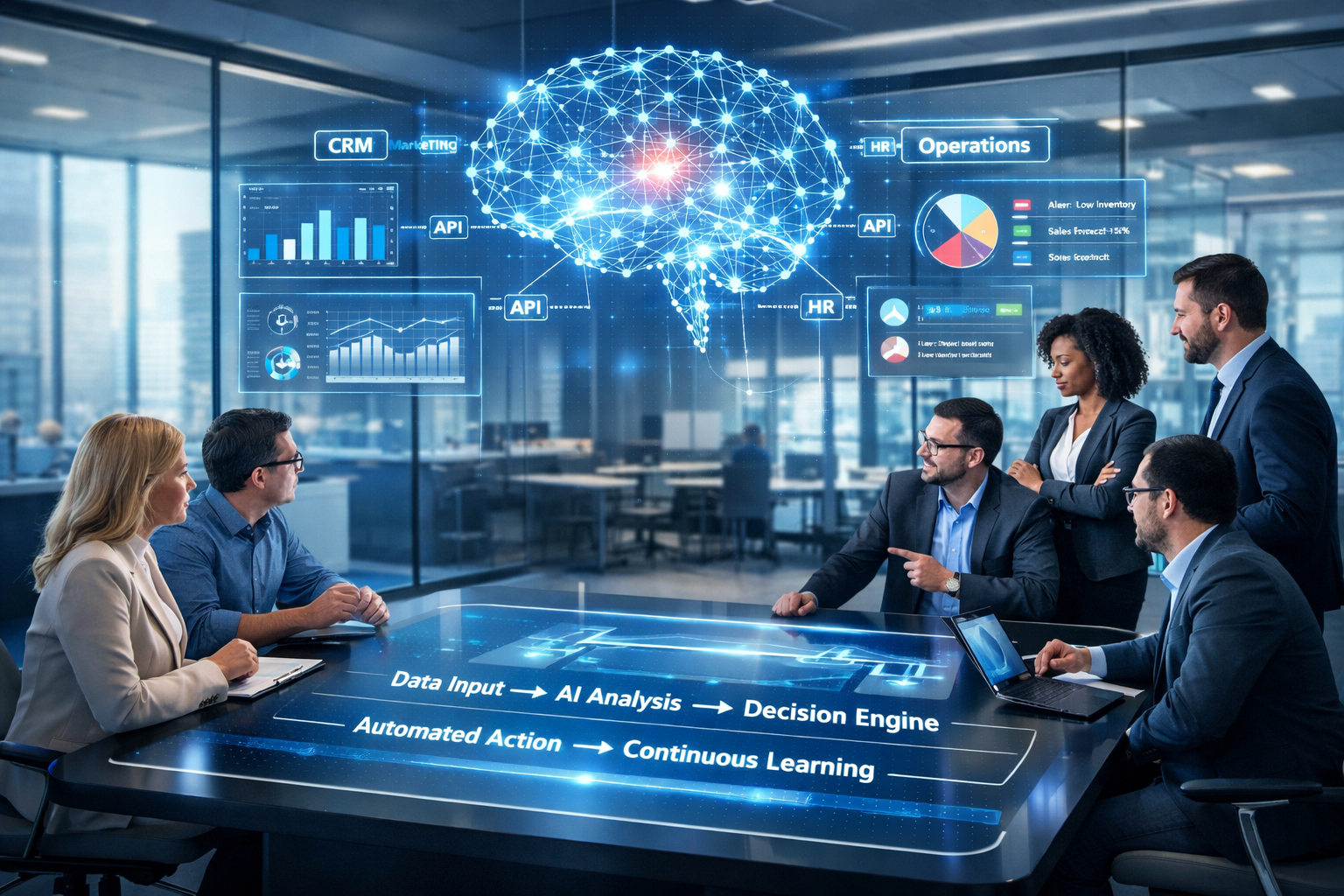
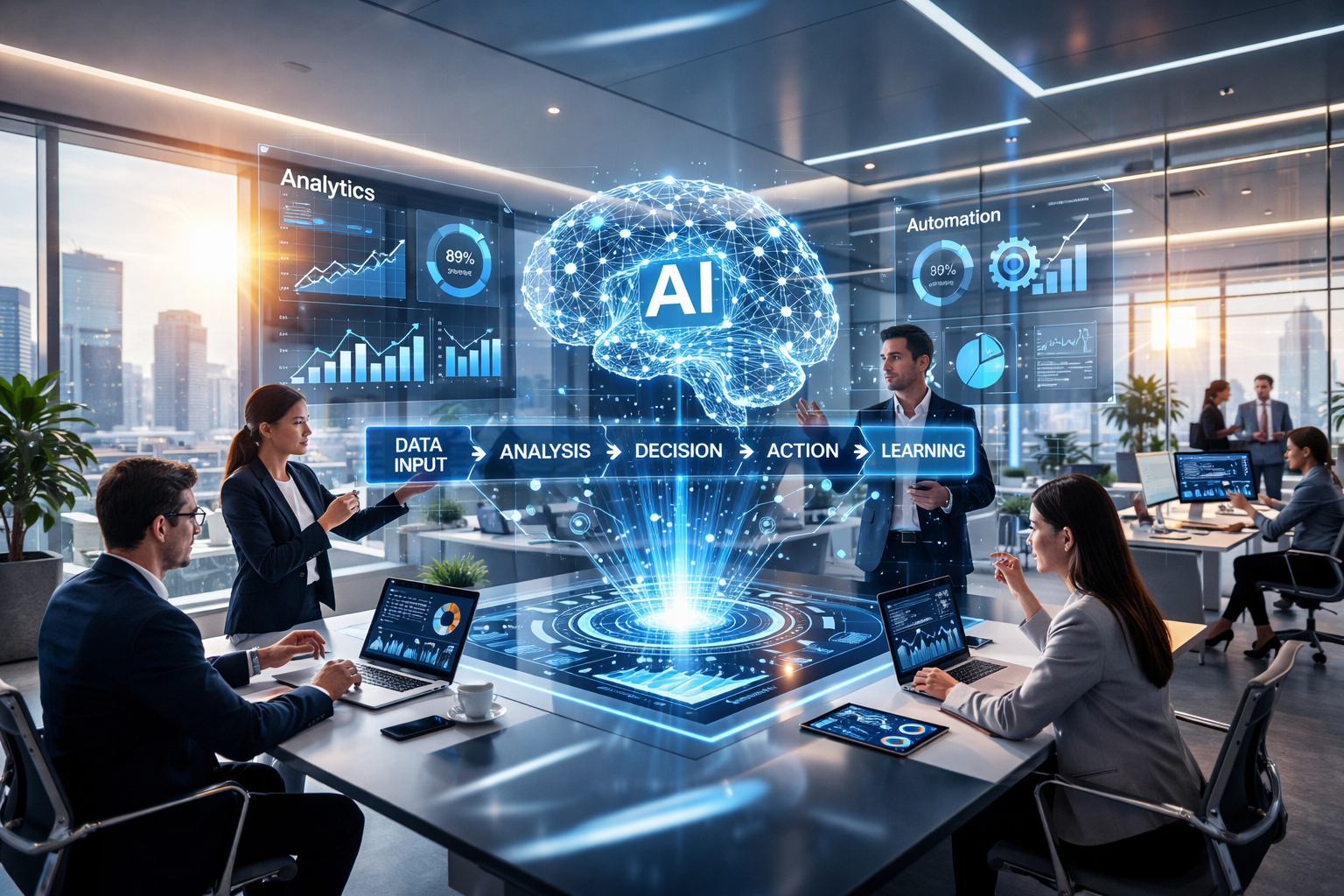
Understanding how these systems function makes their value much clearer. Most autonomous systems operate through four main stages:
1. Perception
The system collects data from its environment. This data can come from:
- Customer inputs
- Emails
- Databases
- APIs
- Sensors
- System dashboards
This stage allows the software to understand what is happening.
2. Decision-Making
After gathering information, the system analyzes it using:
- Machine learning models
- Natural language processing
- Predictive analytics
- Logic frameworks
Based on this analysis, it selects the best possible action.
3. Action
The system then executes tasks such as:
- Sending responses
- Updating CRM records
- Scheduling appointments
- Generating reports
- Triggering workflows
4. Learning
Advanced AI-driven systems continuously improve by evaluating outcomes. If a certain action produces better results, the system strengthens that behavior. This process increases efficiency over time.
Types of AI Agents
Not all intelligent systems are built the same. They vary in complexity and capability.
Simple Reflex Systems
These operate based on predefined rules.
Example:
If a message includes the word “refund,” route it to billing.
They do not learn or adapt.
Model-Based Systems
These consider context and past information before responding.
Example:
A support assistant that checks a customer’s previous tickets before replying.
Goal-Oriented Systems
These work toward achieving defined objectives.
Example:
A sales automation tool designed to maximize lead conversions.
Learning Systems
These improve over time using experience and feedback.
Example:
A hiring assistant that refines candidate scoring based on successful placements.
AI Agents vs Traditional Automation
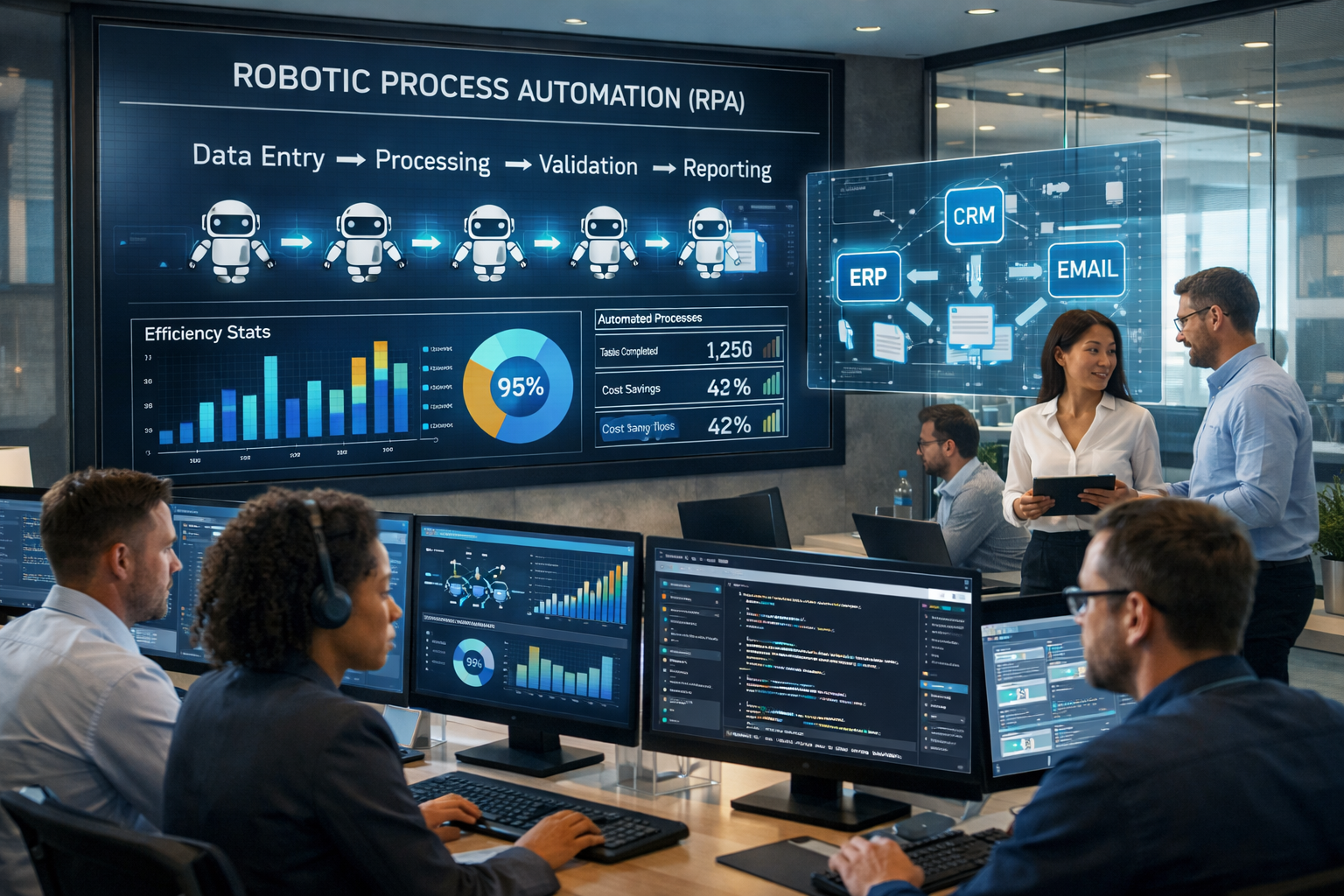
It is important to understand the difference between intelligent agents and standard automation tools.
Traditional Automation
- Rule-based
- Limited flexibility
- Requires manual updates
- Handles repetitive tasks only
Intelligent Automation Systems
- Context-aware
- Data-driven
- Adaptive
- Capable of independent decision-making
- Continuously improving
Traditional automation follows instructions like a machine. AI-powered agents behave more like analysts who can evaluate situations and choose actions.
Real-World Applications
Businesses across industries are already using advanced automation systems.
Customer Support
Modern support platforms use intelligent agents to:
- Categorize tickets
- Draft responses
- Analyze sentiment
- Escalate complex cases
This reduces response times and improves customer satisfaction.
Human Resources
In HR departments, digital agents help with:
- Resume screening
- Interview scheduling
- Candidate ranking
- Onboarding workflows
This significantly reduces hiring time.
Sales and Marketing
AI-driven systems can:
- Qualify leads
- Personalize campaigns
- Predict buying behavior
- Optimize ad targeting
These improvements increase revenue and efficiency.
Finance and Accounting
Automation in finance includes:
- Invoice processing
- Fraud detection
- Budget forecasting
- Expense validation
This reduces human error and strengthens compliance.
Smart Manufacturing
Manufacturing companies use intelligent automation to:
- Monitor production lines
- Predict equipment failures
- Optimize supply chains
This reduces downtime and improves productivity.
Benefits of AI Agents
Organizations are investing in AI agents because of their powerful advantages.
Higher Efficiency
They operate continuously without fatigue, handling tasks faster than manual processes.
Cost Savings
By reducing the need for repetitive labor, companies lower operational costs.
Improved Accuracy
Data-driven decisions minimize human errors.
Scalability
As workloads grow, intelligent systems can handle increased demand without proportional staffing increases.
Better Insights
These systems analyze large datasets to uncover patterns and trends that may not be obvious to humans.
Challenges to Consider
While the benefits are impressive, organizations must also consider potential challenges.
Data Quality
Poor data leads to inaccurate decisions. Clean and reliable data is essential.
Ethical Concerns
Businesses must address:
- Algorithm bias
- Data privacy
- Transparency
- Accountability
Integration Complexity
Implementing advanced automation requires proper IT infrastructure and system integration.
Human Oversight
Even the most advanced AI-driven platforms require monitoring. Human supervision ensures responsible decision-making.
How to Implement AI Agents in Your Business?
Adopting intelligent automation does not have to be overwhelming. Follow these practical steps:
Step 1: Identify Repetitive Decision-Based Tasks
Look for processes involving:
- Data analysis
- Structured workflows
- Measurable outcomes
Step 2: Set Clear Objectives
Define specific goals such as:
- Reduce response time by 30%
- Improve lead conversion by 15%
- Lower operational costs by 20%
Step 3: Start with a Pilot Project
Test the technology in one department before expanding company-wide.
Step 4: Monitor Performance Metrics
Track:
- Accuracy
- Efficiency
- Cost savings
- User satisfaction
Step 5: Keep Humans in the Loop
Technology should enhance teams, not replace leadership and strategic thinking.
The Future of Intelligent Automation
The future of AI agents is rapidly evolving. As machine learning models become more advanced, these systems will grow more capable of:
- Advanced reasoning
- Complex problem-solving
- Multi-step task execution
- Cross-system collaboration
We are also seeing the rise of multi-agent systems, where multiple intelligent systems collaborate to achieve shared objectives.
For example:
- One system gathers data
- Another analyzes trends
- A third executes actions
This collaborative approach is shaping the next generation of enterprise automation.
Will AI Agents Replace Jobs?
Many professionals worry about job displacement. However, the reality is more balanced.
AI agents are best suited for:
- Repetitive tasks
- Data-heavy analysis
- Routine decision-making
Humans remain essential for:
- Creativity
- Strategy
- Emotional intelligence
- Complex negotiations
Rather than replacing workers, intelligent systems redefine roles and improve productivity.
Best Practices for Success
To maximize the benefits of AI agents:
- Use clean, structured data
- Define clear boundaries
- Maintain transparency
- Regularly audit performance
- Train employees to collaborate with technology
Organizations that treat automation as a partnership between humans and intelligent systems achieve the strongest results.
Final Thoughts
AI agents represent a major shift in automation and artificial intelligence. They move beyond simple task execution and introduce adaptive, goal-driven decision-making into business operations.
For beginners, the core idea is simple: these intelligent systems observe data, make informed decisions, take action, and improve over time.
Companies that embrace this technology gain efficiency, scalability, and a competitive edge. As automation continues to evolve, AI agents will play an increasingly central role in digital transformation strategies worldwide.
The future of automation is not just faster — it is smarter, adaptive, and driven by intelligent systems that learn and grow alongside your business.