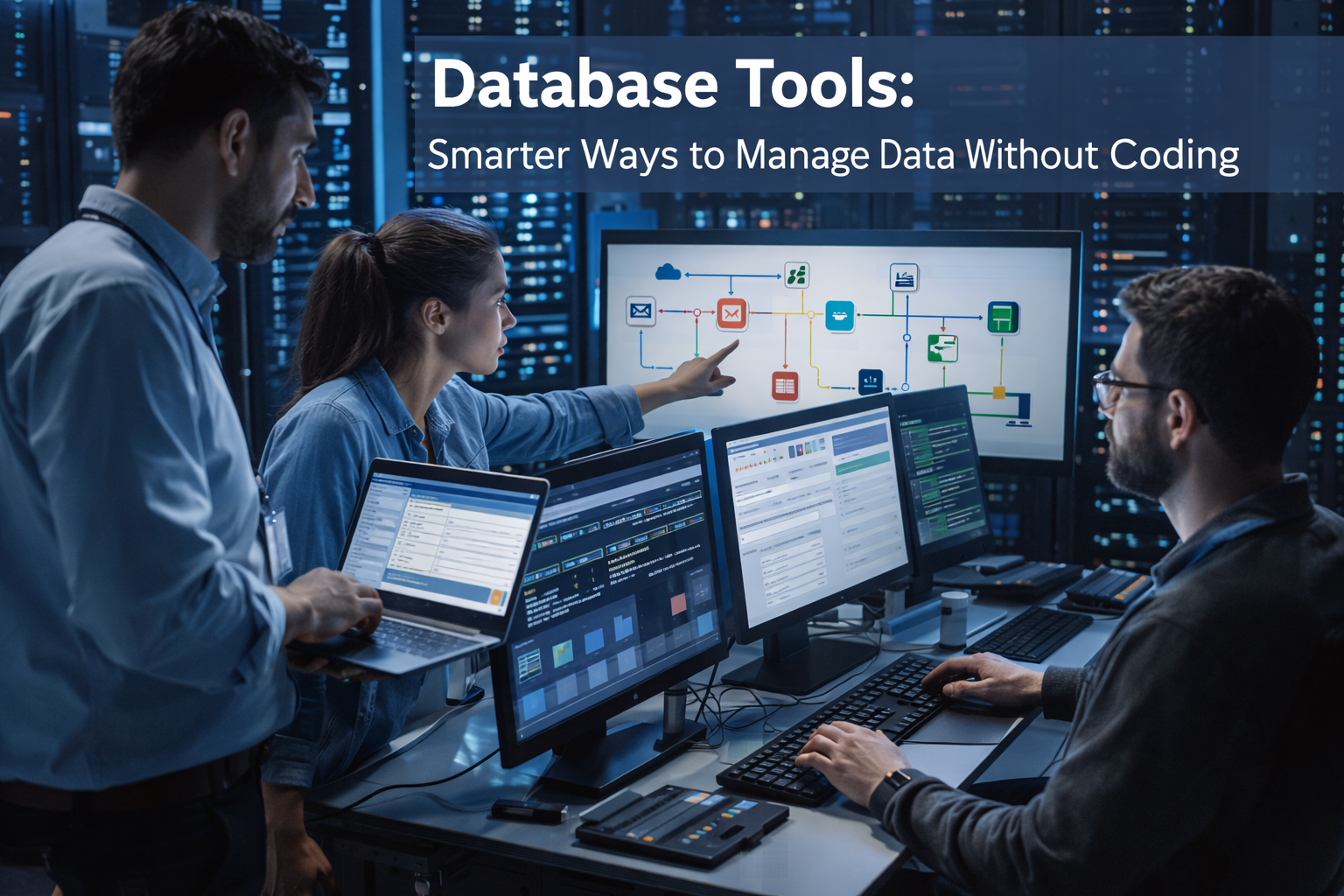
API connectors are becoming a critical component of modern No-Code & Low-Code platforms. These tools enable applications, databases, and digital services to communicate with one another without requiring complex programming. Instead of writing long scripts or custom integrations, developers and non-technical users can connect systems through visual interfaces and prebuilt connectors.
In today’s digital environment, organizations rely on multiple software platforms to manage operations, customer data, marketing campaigns, and internal workflows. However, these tools often operate independently, which can create inefficiencies. Because of this challenge, many companies use to integrate their systems and automate data exchange.
As a result, businesses can streamline operations, reduce manual tasks, and create connected digital ecosystems that support modern workflows.
Understanding API Connectors
Many modern platforms rely on API integration to allow different applications to communicate and exchange data automatically. Integration tools that allow different software applications to communicate through Application Programming Interfaces (APIs). APIs define how systems exchange data and interact with one another.
Traditionally, integrating systems required developers to write custom code that interacts with API endpoints. However, No-Code and Low-Code platforms simplify this process by providing visual connectors that handle the technical details.
Most API connectors offer features such as:
- Prebuilt integrations for popular services
- Visual configuration of API requests
- Authentication management
- Data mapping between systems
- Automated workflows triggered by API events
Because of these capabilities, teams can connect digital platforms without building integrations from scratch.
The Role of API Connectors in No-Code & Low-Code Development
Within the No-Code & Low-Code ecosystem, play a vital role in enabling interoperability between systems. While application builders and automation tools create workflows and user interfaces, ensure that data flows seamlessly between platforms.
For example, a business might use one platform to manage customer data, another for email marketing, and another for project management. Without integration, employees would need to manually transfer information between systems.
Solve this issue by synchronizing data automatically. Consequently, organizations can create unified digital environments where systems communicate continuously.
Furthermore, these connectors make it possible for non-technical teams to build integrations themselves. Instead of relying solely on developers, business users can configure connections through visual tools.
Key Features of Modern API Connectors
Many integration platforms connect applications with database tools that help manage and organize data without complex coding, allowing information to move seamlessly between systems.
Prebuilt Integrations
Many platforms provide prebuilt connectors for widely used services such as CRM systems, cloud storage platforms, and communication tools.
These connectors allow users to establish integrations quickly. Instead of configuring every API parameter manually, users simply select the service they want to connect.
As a result, integrations can be implemented in minutes rather than days.
Authentication Management
API integrations often require secure authentication methods such as API keys, OAuth tokens, or access credentials.
Modern connectors manage these authentication processes automatically. Therefore, users can establish secure connections without handling sensitive security configurations directly.
Data Mapping
When systems exchange information, data fields often need to be mapped between platforms. For example, a customer name field in one system must correspond to a similar field in another.
Typically include visual mapping tools that allow users to link fields easily.
Consequently, data can move between systems accurately and consistently.
Trigger-Based Automation
Some connectors include automation capabilities. When a specific event occurs in one application, the connector triggers actions in another system.
For instance, when a new customer signs up on a website, the connector may automatically create a record in a CRM system and send a welcome email.
Because of this automation, organizations can eliminate many repetitive tasks.
Benefits of Using API Connectors
Businesses adopt API connectors for several important reasons.
Simplified System Integration
Traditional system integration often requires specialized development skills. Simplify this process by providing visual tools that handle technical complexities.
As a result, organizations can connect platforms faster and more efficiently.
Improved Operational Efficiency
When systems exchange data automatically, employees no longer need to perform manual updates between applications.
Consequently, teams can focus on higher-value tasks rather than administrative work.
Faster Digital Innovation
API connectors allow businesses to experiment with new digital solutions more easily. Companies can combine different services and create new workflows without building custom integrations.
Therefore, organizations can innovate more quickly in competitive markets.
Reduced Development Costs
Building custom integrations can be expensive and time-consuming. However, visual connectors reduce development effort by providing reusable integration components.
This approach helps organizations lower technology costs while maintaining flexibility.
Real-World Applications of API Connectors
API connectors support a wide range of practical use cases across industries.
Customer Data Synchronization
Many organizations maintain customer information across multiple platforms. API connectors allow these systems to stay synchronized automatically.
For example, when a customer updates their contact information in one platform, the change can immediately update other connected systems.
Marketing Automation
Marketing teams often integrate email platforms, analytics tools, and CRM systems. API connectors enable these tools to exchange campaign data and customer insights.
As a result, marketing strategies become more personalized and effective.
E-Commerce Integration
Online stores rely on multiple services, including payment processors, inventory management systems, and shipping platforms.
API connectors enable these services to exchange order data automatically. Consequently, e-commerce operations become more efficient and scalable.
Internal Business Processes
Organizations also use API connectors to integrate internal tools such as HR systems, project management platforms, and financial software.
These integrations help automate administrative workflows and improve collaboration across departments.
API Connectors and Digital Transformation
Digital transformation requires organizations to adopt flexible technology infrastructures. Companies must integrate various software platforms to support modern business operations.
API connectors are essential for achieving this integration. They allow businesses to connect cloud services, internal applications, and external platforms within a unified environment.
Moreover, these connectors help organizations scale their technology ecosystems. As new tools are adopted, they can be integrated into existing systems without major development efforts.
Consequently, businesses gain the flexibility needed to adapt to evolving technological landscapes.
Challenges and Considerations
Despite their advantages, API connectors also present certain challenges that organizations should consider.
API Limitations
Some external platforms impose limitations on how frequently APIs can be accessed. Organizations must ensure that integrations comply with these restrictions.
However, most modern connectors include tools for managing API rate limits.
Data Security
Because API connectors transfer data between systems, security is an important consideration. Organizations should implement authentication controls and encryption measures to protect sensitive information.
Integration Complexity
As the number of connected systems increases, integration architecture can become complex. Careful planning is required to maintain reliable and organized workflows.
Fortunately, many platforms now provide monitoring tools that help manage integration performance.
The Future of API Connectors
The future of API connectors is closely tied to advances in automation and artificial intelligence. AI-powered integration platforms are beginning to analyze data flows and recommend optimal workflows.
In addition, API marketplaces are expanding rapidly. These marketplaces allow developers and organizations to discover new integrations and connectors for emerging technologies.
Furthermore, the combination of API connectors with No-Code and Low-Code tools will continue empowering non-technical teams. Business users will increasingly build their own digital workflows without relying heavily on software developers.
As this trend continues, API connectors will become central components of modern digital ecosystems.
Conclusion
API connectors play a vital role in the No-Code & Low-Code landscape by enabling seamless integration between digital systems. Through visual configuration tools and prebuilt integrations, these connectors simplify the process of connecting applications, databases, and cloud services.
Organizations benefit from improved efficiency, faster innovation, and reduced development costs. Moreover, API connectors allow businesses to create flexible technology environments that support modern workflows.
As digital ecosystems continue expanding, API connectors will remain essential tools for organizations seeking to build connected and scalable software infrastructures.