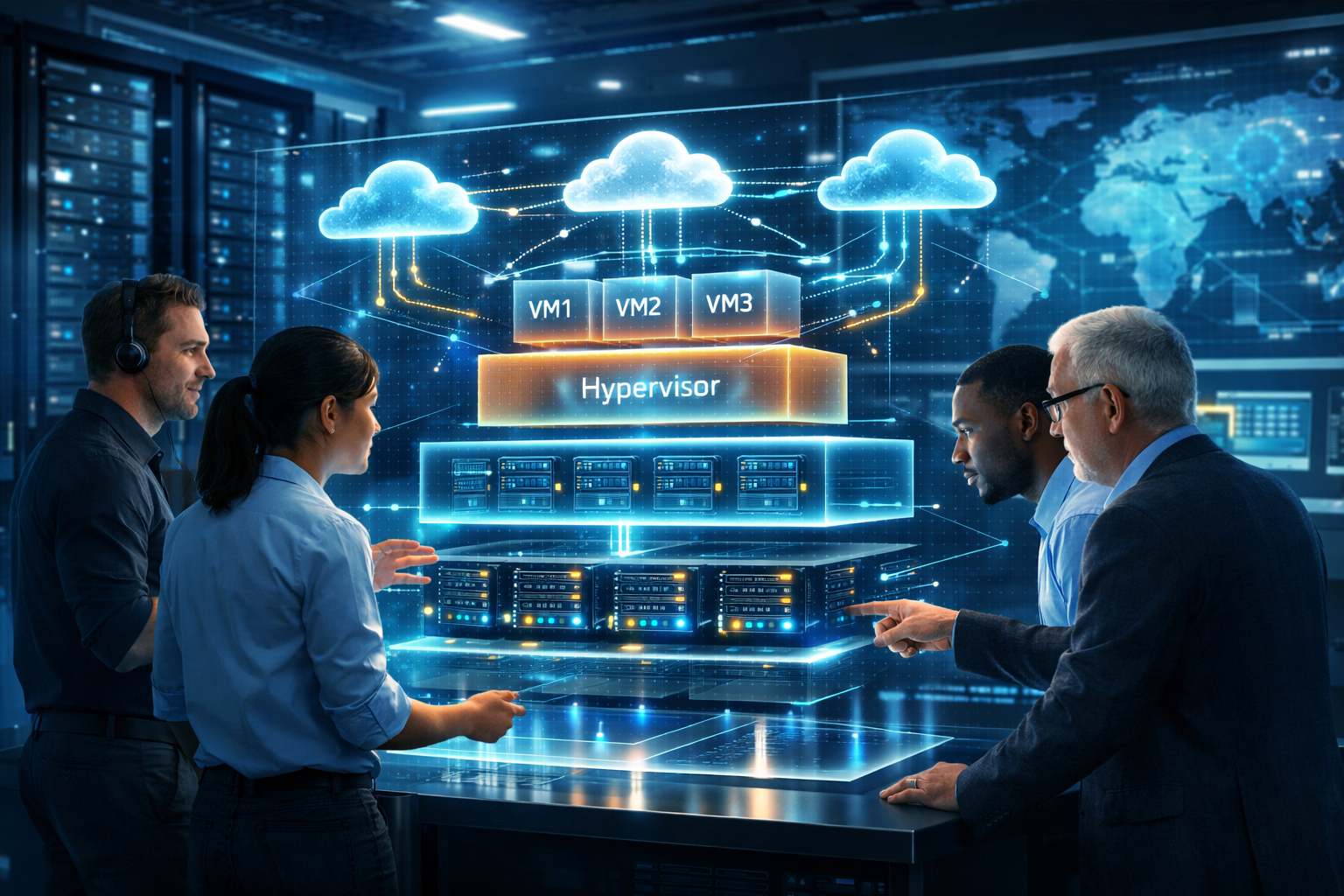
In today’s digital economy, System Monitoring is a critical foundation of cloud and infrastructure technology. As organizations scale across hybrid and multi-cloud environments, visibility into infrastructure health, performance, and availability becomes essential.
Without effective System Monitoring, even the most advanced architecture can suffer from downtime, latency issues, security gaps, and operational blind spots. However, when implemented strategically, it transforms IT operations into a proactive, data-driven function that supports growth and innovation.
This article explores how System Monitoring supports cloud and infrastructure foundations, its core components, best practices, and how it evolves in modern enterprise environments.
What Is System Monitoring?
System Monitoring refers to the continuous observation and analysis of IT infrastructure, applications, networks, and cloud resources. Its purpose is simple yet powerful: ensure systems remain available, performant, and secure.
Unlike traditional server checks, modern monitoring strategies provide real-time telemetry across distributed systems, containers, microservices, and cloud-native applications.
At a practical level, monitoring answers key operational questions:
- Are services running as expected?
- Is infrastructure operating within thresholds?
- Are users experiencing latency?
- Is there unusual system behavior?
- What caused the recent incident?
By continuously collecting metrics, logs, and traces, organizations gain actionable insights rather than reactive alerts.
Why System Monitoring Matters in Cloud Environments?
Cloud infrastructure is dynamic by design. Resources scale automatically, workloads shift across regions, and services depend on complex interconnections. Because of this complexity, System Monitoring becomes the visibility layer that keeps everything aligned.
1. Improves Availability
Downtime directly impacts revenue and customer trust. With proactive monitoring in place, teams can detect performance degradation before it escalates into service disruption.
2. Optimizes Performance
Monitoring infrastructure metrics such as CPU usage, memory consumption, disk I/O, and network throughput allows teams to identify bottlenecks early. As a result, performance tuning becomes data-driven instead of guesswork.
3. Enhances Security Visibility
Modern monitoring frameworks integrate with security analytics. Suspicious access attempts, abnormal traffic spikes, and configuration changes can be flagged instantly.
4. Enables Smart Capacity Planning
Historical telemetry provides trend analysis. Infrastructure teams can forecast growth, plan scaling strategies, and avoid overprovisioning costs.
5. Supports Compliance Requirements
Regulated industries require system logs and audit trails. A structured monitoring strategy ensures operational transparency and regulatory readiness.
Core Layers of System Monitoring
To build a resilient infrastructure foundation, organizations must monitor multiple layers simultaneously.
Infrastructure Monitoring
This layer tracks servers, virtual machines, storage systems, and networking components.
Common metrics include:
- CPU utilization
- Memory usage
- Disk performance
- Network latency
- Resource saturation
Infrastructure visibility ensures the hardware and cloud compute layer remains stable.
Application Performance Monitoring (APM)
While infrastructure metrics are important, application-level monitoring reveals the user experience.
APM tracks:
- API response times
- Error rates
- Transaction flows
- Database query performance
This layer helps teams quickly identify slow endpoints or failing services in distributed architectures, especially in modern microservices software systems.
Log Monitoring
Logs provide granular insight into system events. Centralized log aggregation enables correlation between infrastructure issues and application behavior.
Instead of reviewing logs manually, modern tools index and analyze them automatically for faster troubleshooting.
Network Monitoring
Distributed systems rely heavily on network performance. Monitoring bandwidth usage, packet loss, routing anomalies, and firewall behavior is essential in hybrid architectures.
Cloud & Container Monitoring
Cloud-native environments introduce Kubernetes clusters, containers, serverless functions, and managed services. These components require dynamic monitoring that adapts to ephemeral workloads. Leading platforms such as Google Cloud Monitoring provide integrated visibility across compute, containers, and managed cloud services to maintain performance and reliability.
Without centralized visibility, containerized environments become difficult to manage at scale.
Key Metrics That Matter
Although data collection is easy, meaningful metrics drive value. Therefore, organizations must focus on indicators aligned with business outcomes.
The Four Golden Signals
Popularized in Site Reliability Engineering (SRE), the golden signals provide a reliable framework:
- Latency – How long requests take
- Traffic – System demand
- Errors – Failed request rate
- Saturation – Resource capacity levels
Together, these metrics offer a balanced view of system health.
Service-Level Objectives (SLOs)
System Monitoring also supports measurable performance targets. For example:
- 99.9% uptime guarantee
- API response under 200 milliseconds
- Error rate below 1%
By aligning monitoring metrics with service-level indicators, IT teams connect technical performance with business expectations.
Modern Architecture for Monitoring Systems
Traditional monitoring relied on static thresholds and isolated dashboards. However, cloud-native ecosystems demand more intelligent approaches.
Observability Integration
Monitoring now works alongside observability practices, which include:
- Metrics for numerical performance
- Logs for event tracking
- Traces for distributed transaction flow
This integration helps teams understand both what happened and why it happened.
Centralized Dashboards
Unified dashboards aggregate data from multiple sources:
- Virtual machines
- Containers
- Databases
- Load balancers
- Managed cloud services
As a result, teams eliminate silos and improve cross-functional visibility.
Automation and AI
Modern monitoring platforms incorporate machine learning for anomaly detection. Instead of fixed thresholds, intelligent systems learn normal patterns and detect deviations automatically.
Benefits include:
- Reduced alert fatigue
- Faster root cause identification
- Predictive failure detection
- Automated remediation workflows
This shift transforms monitoring from reactive oversight into proactive infrastructure intelligence.
Best Practices for Effective System Monitoring
To maximize impact, organizations should follow structured implementation guidelines.
Define Clear Objectives
Start by identifying mission-critical services. Prioritize systems that directly impact revenue, customers, or compliance requirements.
Monitor User Experience
Synthetic testing and real user monitoring provide external validation of system performance. Infrastructure may appear healthy internally while users experience latency.
Reduce Alert Noise
Not every metric needs an alert. Implement tiered severity levels and intelligent escalation policies.
Automate Monitoring Deployment
Integrate monitoring configurations into infrastructure-as-code pipelines. This ensures consistent coverage across environments.
Use Role-Based Views
Executives require high-level summaries, while engineers need granular metrics. Custom dashboards enhance decision-making efficiency.
Continuously Optimize
As infrastructure evolves, monitoring strategies must adapt. Regular audits of metrics, alerts, and dashboards maintain relevance.
Multi-Cloud and Hybrid Challenges
Many enterprises operate across multiple cloud providers and on-premises systems. Therefore, unified visibility becomes complex.
Common challenges include:
- Fragmented telemetry
- Vendor-specific limitations
- Data overload
- Inconsistent reporting standards
To address this, organizations should adopt vendor-neutral monitoring frameworks that integrate across environments.
A unified monitoring strategy reduces operational blind spots and improves reliability across distributed systems.
Common Pitfalls to Avoid
Even mature organizations encounter monitoring challenges.
Over-Collecting Data
Collecting excessive telemetry without filtering leads to analysis paralysis. Focus on actionable insights rather than raw volume.
Ignoring Context
Metrics alone are insufficient. Correlating metrics with logs and traces provides deeper insight.
Underestimating Skill Requirements
Effective monitoring requires expertise in cloud architecture, automation, and data analytics. Training and documentation are essential.
The Future of Infrastructure Monitoring
Technology continues to evolve rapidly. Consequently, monitoring capabilities must advance as well.
AIOps Integration
Artificial intelligence will increasingly automate anomaly detection and incident management.
Autonomous Infrastructure
Self-healing systems will trigger automated scaling, restart services, or reroute traffic without manual intervention.
Edge and IoT Expansion
As edge computing grows, distributed monitoring strategies must extend beyond centralized data centers.
Security Convergence
Performance monitoring and security analytics are merging, creating unified operational intelligence platforms.
Conclusion
System Monitoring remains the backbone of cloud and infrastructure foundation technology. Without it, organizations lack the visibility required to maintain availability, performance, and security.
However, when implemented strategically, it delivers:
- Proactive issue detection
- Performance optimization
- Reliable scalability
- Improved compliance
- Operational transparency
In modern digital ecosystems, visibility drives resilience. Ultimately, System Monitoring enables organizations to transform infrastructure from a reactive support function into a strategic advantage.
As cloud environments grow more complex, investing in advanced monitoring capabilities is not just recommended — it is essential for sustainable growth and operational excellence.