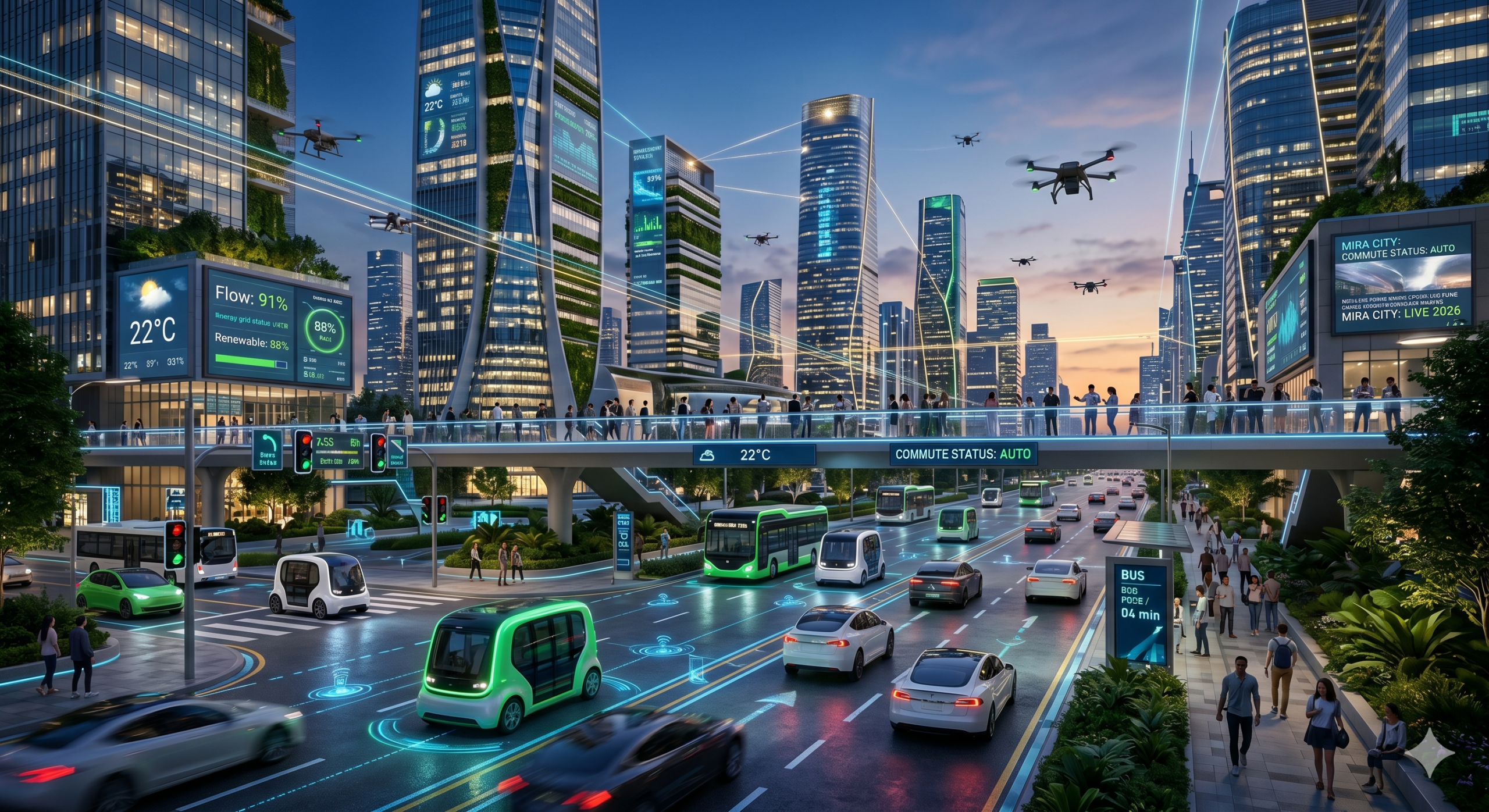
Smart infrastructure is transforming how cities, industries, and governments operate in the digital age. By integrating advanced technologies such as the Internet of Things (IoT), artificial intelligence (AI), cloud computing, and real-time data analytics, smart infrastructure enables more efficient, sustainable, and resilient systems.
From intelligent transportation networks to smart energy grids and connected water systems, infrastructure is no longer static—it is adaptive, data-driven, and responsive. As urban populations grow and environmental challenges intensify, the need for smart infrastructure has become critical for long-term sustainability and economic growth.
This guide explores the core components, technologies, benefits, challenges, and future trends of smart infrastructure in 2026.
What is Smart Infrastructure?
Smart infrastructure refers to physical systems—such as roads, bridges, power grids, and buildings—enhanced with digital technologies that enable monitoring, automation, and intelligent decision-making.
Unlike traditional infrastructure, smart systems can:
- Collect real-time data through sensors
- Analyze conditions using AI and analytics
- Automatically respond to changing environments
- Improve performance without human intervention
In simple terms, smart infrastructure combines hardware + software + connectivity to create self-optimizing systems.
Core Technologies Behind Smart Infrastructure
1. Internet of Things (IoT)
IoT devices are the backbone of smart infrastructure. Sensors and connected devices gather real-time data from physical environments.
Examples include:
- Traffic sensors monitoring congestion
- Smart meters tracking electricity usage
- Environmental sensors measuring air quality
These devices provide continuous data streams that power intelligent systems.
2. Artificial Intelligence (AI) and Machine Learning
AI processes vast amounts of data to identify patterns, predict outcomes, and automate decisions.
Applications include:
- Predictive maintenance for bridges and roads
- Traffic flow optimization
- Energy demand forecasting
Machine learning models continuously improve performance based on historical data.
3. Cloud Computing and Edge Computing
Cloud platforms store and process large datasets, while edge computing enables real-time processing closer to the source.
Benefits:
- Reduced latency for critical systems
- Scalable infrastructure management
- Cost-efficient data processing
Together, they ensure both speed and scalability.
4. Big Data Analytics
Smart infrastructure generates massive data volumes. Big data analytics extracts actionable insights to improve operations.
Key uses:
- Identifying inefficiencies
- Forecasting infrastructure demand
- Enhancing public services
5. 5G and Advanced Connectivity
High-speed, low-latency networks such as 5G enable seamless communication between devices.
Impact:
- Faster data transmission
- Real-time system responses
- Support for autonomous systems
Key Applications of Smart Infrastructure
Smart Cities
Smart cities use interconnected systems to improve urban living.
Examples:
- Intelligent traffic management systems
- Smart street lighting that adjusts to activity
- Digital public services
Benefits include reduced congestion, improved safety, and enhanced quality of life.
Smart Transportation
Transportation systems are becoming more efficient and autonomous.
Features:
- Real-time traffic monitoring
- Smart parking systems
- Autonomous vehicle integration
This reduces travel time, fuel consumption, and emissions.
Smart Energy Grids
Smart grids optimize electricity distribution using real-time data.
Capabilities:
- Demand-response management
- Integration of renewable energy sources
- Automated outage detection
This leads to more reliable and sustainable energy systems.
Smart Water Management
Water systems are enhanced with sensors and analytics.
Applications:
- Leak detection
- Water quality monitoring
- Efficient resource distribution
This helps conserve water and reduce waste.
Smart Buildings
Buildings are becoming intelligent environments.
Features:
- Automated climate control
- Energy-efficient lighting
- Occupancy-based systems
Smart buildings reduce operational costs and improve occupant comfort.
Benefits of Smart Infrastructure
1. Increased Efficiency
Automation and data-driven decisions eliminate inefficiencies across systems.
Example:
Traffic systems dynamically adjust signals to reduce congestion.
2. Cost Savings
Predictive maintenance and optimized resource use lower operational costs.
Organizations can:
- Reduce downtime
- Extend asset lifespan
- Minimize energy waste
3. Sustainability
Smart infrastructure supports environmental goals.
Benefits include:
- Reduced carbon emissions
- Efficient energy use
- Improved waste management
4. Enhanced Safety
Real-time monitoring improves safety across infrastructure systems.
Examples:
- Early detection of structural issues
- Smart surveillance systems
- Emergency response optimization
5. Improved Quality of Life
Citizens benefit from:
- Better transportation
- Cleaner environments
- More reliable services
Challenges of Implementing Smart Infrastructure
1. High Initial Investment
Deploying smart technologies requires significant upfront costs.
Includes:
- Sensors and devices
- Network infrastructure
- Software platforms
However, long-term ROI often outweighs initial expenses.
2. Cybersecurity Risks
Connected systems are vulnerable to cyber threats.
Risks include:
- Data breaches
- System disruptions
- Infrastructure attacks
Strong cybersecurity frameworks are essential.
3. Data Privacy Concerns
Large-scale data collection raises privacy issues.
Organizations must:
- Ensure compliance with regulations
- Protect user data
- Maintain transparency
4. Integration Complexity
Legacy systems may not easily integrate with modern technologies.
Challenges:
- Compatibility issues
- System interoperability
- Data standardization
5. Skills Gap
Implementing and managing smart infrastructure requires specialized expertise.
Demand is growing for:
- Data scientists
- IoT engineers
- Cybersecurity professionals
Smart Infrastructure Architecture
A typical smart infrastructure system consists of multiple layers:
1. Sensing Layer
Collects data through sensors and IoT devices.
2. Communication Layer
Transfers data via networks such as 5G or fiber optics.
3. Data Processing Layer
Analyzes data using AI, cloud computing, and analytics tools.
4. Application Layer
Delivers insights and controls systems through dashboards and automation.
This layered architecture ensures scalability and flexibility.
Real-World Examples
Many cities are already adopting advanced systems to improve efficiency and reduce downtime. A detailed smart infrastructure implementation strategy can be seen in this comprehensive guide on smart city deployment, which highlights real-world case studies and measurable ROI.
Intelligent Traffic Systems
Cities worldwide are implementing AI-powered traffic management systems that reduce congestion and improve road safety.
Smart Energy Projects
Utilities are deploying smart grids to integrate renewable energy and improve efficiency.
Connected Infrastructure Monitoring
Bridges and highways are equipped with sensors that detect structural weaknesses before failures occur.
Future Trends in Smart Infrastructure
1. AI-Driven Autonomous Systems
Infrastructure will increasingly operate autonomously with minimal human intervention.
Examples:
- Self-regulating traffic systems
- Autonomous public transport
2. Digital Twins
Digital twins are virtual replicas of physical infrastructure.
Benefits:
- Real-time simulation
- Predictive analysis
- Improved planning
3. Sustainability Integration
Future infrastructure will prioritize environmental impact.
Focus areas:
- Renewable energy integration
- Carbon-neutral cities
- Green building technologies
4. Edge AI Expansion
Processing data at the edge will enable faster, localized decision-making.
5. Blockchain for Infrastructure Security
Blockchain technology may enhance:
- Data integrity
- Secure transactions
- Infrastructure transparency
Best Practices for Implementing Smart Infrastructure
To successfully deploy smart infrastructure, organizations should:
Start with a Clear Strategy
Define goals, KPIs, and long-term objectives.
Invest in Scalable Solutions
Choose technologies that can grow with demand.
Prioritize Cybersecurity
Implement robust security measures from the beginning.
Ensure Interoperability
Adopt open standards for seamless integration.
Focus on Data Governance
Establish clear policies for data management and privacy.
Conclusion
Smart infrastructure is reshaping the way societies function by integrating digital intelligence into physical systems. It offers significant advantages in efficiency, sustainability, and quality of life, making it a cornerstone of modern development.
While challenges such as cost, cybersecurity, and integration remain, advancements in AI, IoT, and connectivity continue to drive innovation in this space. As we move further into 2026 and beyond, smart infrastructure will play a critical role in building resilient, sustainable, and future-ready communities.
Organizations and governments that invest in smart infrastructure today will be better positioned to meet the demands of tomorrow’s digital and urban landscape.