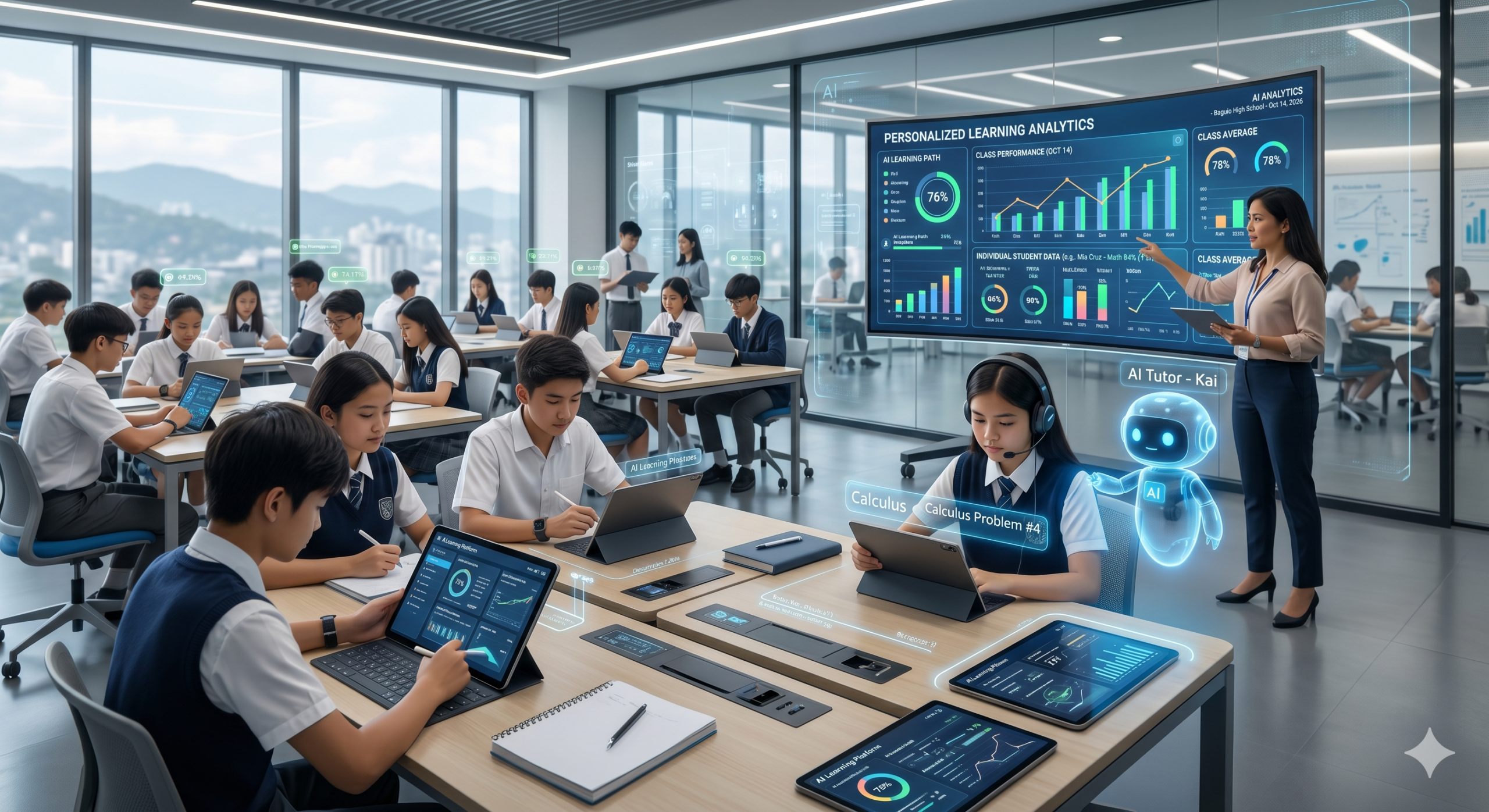
AI in education is transforming how students learn and how educators teach. In recent years, schools, universities, and training platforms have increasingly adopted artificial intelligence to improve learning outcomes and streamline administrative tasks. In particular, AI enables personalized learning experiences, real-time feedback, and data-driven decision-making.
As a result, traditional education models are evolving into more flexible and adaptive systems. Instead of relying solely on standardized approaches, educators can now tailor content to individual student needs. Moreover, AI-powered tools help automate repetitive tasks, allowing teachers to focus more on student engagement and mentorship. Consequently, both efficiency and learning quality improve.
This guide explores AI in education in detail, including its core technologies, applications, benefits, challenges, and future trends.
What Is AI in Education?
AI in education refers to the use of artificial intelligence technologies to enhance teaching, learning, and administrative processes. In other words, it involves using intelligent systems to analyze data, make decisions, and automate tasks in educational environments.
Unlike traditional systems, AI-driven platforms can adapt to each learner’s pace and preferences. For example, they can recommend personalized learning paths or provide instant feedback on assignments. Additionally, AI can identify patterns in student performance, helping educators make informed decisions.
Key features include:
- Personalized learning experiences
- Intelligent tutoring systems
- Automated grading and assessment
- Predictive analytics for student performance
- Real-time feedback and recommendations
Overall, these capabilities make education more efficient, engaging, and accessible.
Core Technologies Behind AI in Education
Machine Learning
Machine learning enables systems to analyze student data and improve over time. For instance, algorithms can identify learning patterns and predict outcomes. As a result, educators can intervene early when students need support.
Natural Language Processing (NLP)
NLP allows AI systems to understand and generate human language. For example, chatbots and virtual assistants can answer student questions. In addition, NLP supports automated essay grading and language learning tools.
Computer Vision
Computer vision analyzes visual data such as images and videos. As a result, it can be used for attendance tracking, exam monitoring, and interactive learning experiences.
Cloud Computing
Cloud platforms provide scalable infrastructure for AI tools. Furthermore, they enable remote access to learning resources. Consequently, students can learn anytime and anywhere.
Big Data Analytics
Big data analytics processes large volumes of educational data. Therefore, institutions can gain insights into student performance and improve teaching strategies.
How AI in Education Works
AI systems in education operate through a structured process. First, data is collected from various sources such as student interactions, assessments, and learning platforms. Next, this data is analyzed using machine learning algorithms.
Then, the system generates insights and recommendations. After that, AI tools deliver personalized content or feedback to students. Finally, the system continuously learns and improves based on new data.
Overall, this cycle ensures that learning experiences become more effective over time.
Applications of AI in Education
Personalized Learning
Personalized learning is one of the most significant applications. For example, AI systems adapt content based on a student’s progress. As a result, learners receive customized support.
Intelligent Tutoring Systems
AI-powered tutors provide one-on-one assistance. In addition, they offer instant feedback and explanations. Consequently, students can learn at their own pace.
Automated Grading
AI automates grading for assignments and exams. Therefore, teachers save time and ensure consistent evaluation.
Virtual Assistants
Virtual assistants help students and educators with tasks such as scheduling and answering queries. Moreover, they improve accessibility and support.
Predictive Analytics
Predictive analytics identifies students at risk of falling behind. As a result, educators can take proactive measures.
Benefits of AI in Education
Improved Learning Outcomes
AI enhances learning by providing personalized content. As a result, students achieve better results.
Increased Efficiency
Automation reduces administrative workload. Consequently, educators can focus on teaching.
Enhanced Engagement
Interactive tools make learning more engaging. In addition, students remain motivated.
Accessibility
AI tools support diverse learning needs. Therefore, education becomes more inclusive.
Data-Driven Decisions
AI provides actionable insights. As a result, institutions can improve strategies.
Challenges of AI in Education
Data Privacy Concerns
Educational data must be protected. Therefore, strong security measures are essential.
Implementation Costs
AI systems can be expensive to deploy. However, long-term benefits often justify the investment.
Lack of Technical Skills
Educators may need training to use AI tools effectively. Consequently, institutions must invest in skill development.
Ethical Issues
AI systems must avoid bias and ensure fairness. In addition, transparency is critical.
Dependence on Technology
Over-reliance on AI may reduce human interaction. Therefore, balance is necessary.
AI in Education Architecture
A typical AI system in education includes several layers. First, the data layer collects and stores information. Next, the processing layer analyzes data using AI models.
Then, the application layer delivers insights and functionalities. Finally, the interface layer allows users to interact with the system.
Future Trends in AI in Education
As technology continues to evolve, AI in education trends 2026 highlight how intelligent systems are moving beyond simple tools toward fully integrated learning workflows and automated processes.
Adaptive Learning Systems
AI will create more advanced adaptive learning platforms. As a result, education will become highly personalized.
AI-Powered Content Creation
AI will generate educational content automatically. Therefore, teachers can save time.
Immersive Learning Experiences
AI will integrate with virtual and augmented reality. Consequently, learning will become more interactive.
Global Learning Platforms
AI will enable global access to education. As a result, students worldwide can benefit.
Continuous Learning Models
AI will support lifelong learning. Therefore, individuals can continuously upgrade skills.
Best Practices for Implementing AI in Education
First, define clear objectives for AI adoption. Next, ensure data quality and accuracy.
In addition, prioritize security and privacy. Moreover, choose scalable platforms.
Finally, provide training for educators and staff.
Conclusion
AI in education is revolutionizing the learning experience. In summary, it enables personalized learning, improves efficiency, and enhances engagement. As technology continues to evolve, AI will play an even greater role in shaping the future of education.
Ultimately, institutions that embrace AI will be better positioned to deliver high-quality education. Therefore, adopting AI is essential for staying competitive in the modern educational landscape.