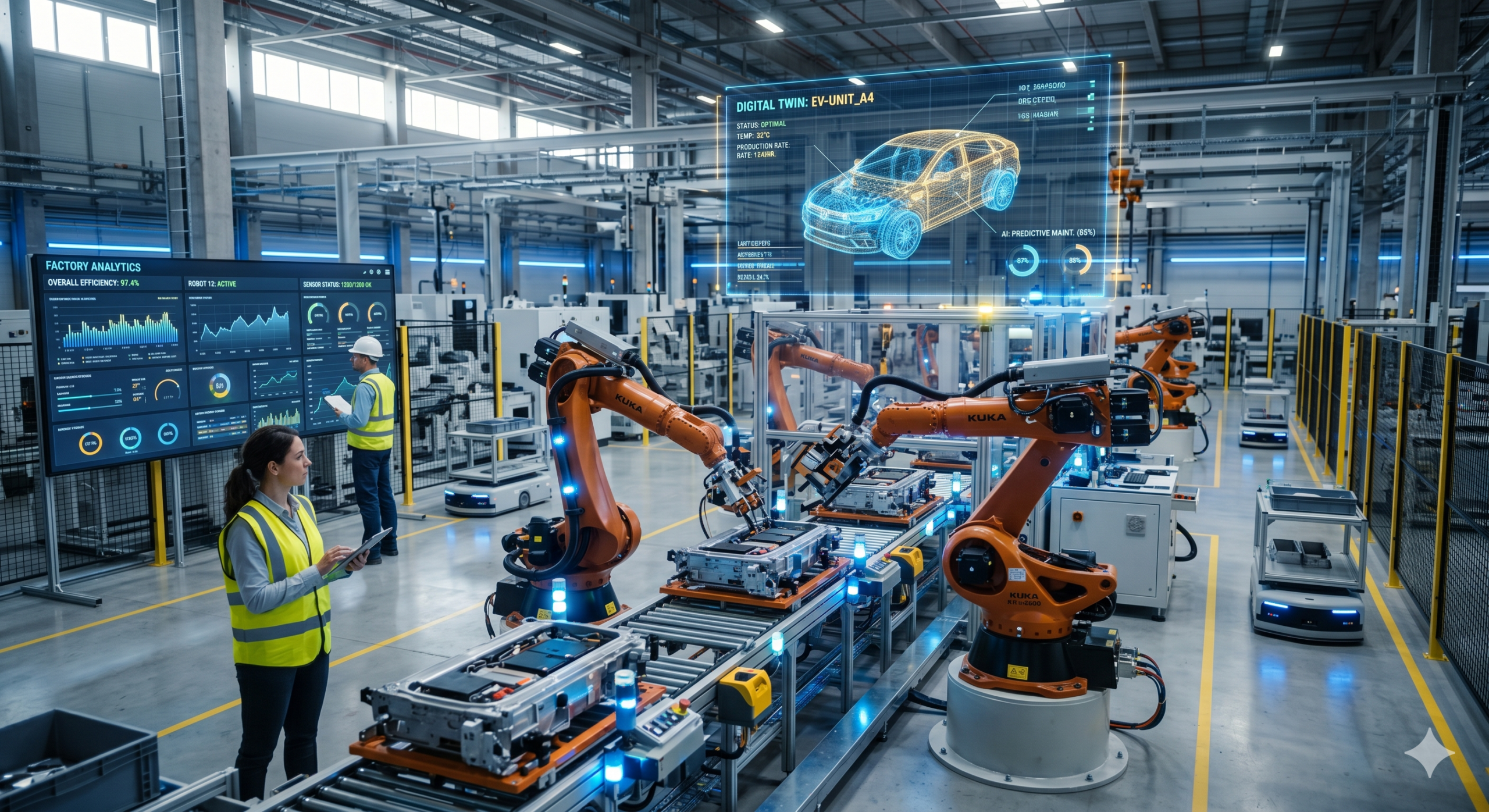
Smart manufacturing systems are transforming the industrial landscape at an unprecedented pace. For a deeper understanding of how connected technologies are reshaping production, this smart manufacturing systems guide provides valuable insights into Industry 4.0, real-time data, and intelligent factory operations.
In recent years, manufacturers have increasingly adopted advanced technologies to improve efficiency and remain competitive. In particular, tools such as artificial intelligence (AI), the Internet of Things (IoT), robotics, and data analytics are reshaping how production environments operate.
As a result, modern manufacturing is no longer dependent on isolated machines or manual processes. Instead, it relies on interconnected systems that communicate in real time. Moreover, these systems enable predictive maintenance, automated decision-making, and continuous optimization. Consequently, businesses can reduce costs while improving productivity and product quality.
In this guide, you will learn everything about smart manufacturing systems, including their components, technologies, applications, benefits, challenges, and future trends.
What Are Smart Manufacturing Systems?
Smart manufacturing systems refer to digitally connected environments where machines, sensors, and software platforms work together to optimize production processes. In other words, these systems create intelligent factories that can monitor, analyze, and improve operations automatically.
Unlike traditional manufacturing, which relies on static workflows, smart systems are dynamic and adaptive. For example, machines can adjust production based on real-time data. Additionally, systems can identify inefficiencies and correct them without human intervention.
Key characteristics include:
- Real-time data collection and analysis
- Automated workflows and robotics
- Interconnected machines and platforms
- Adaptive and flexible production
- Continuous improvement using AI
Overall, these features form the foundation of Industry 4.0, enabling manufacturers to operate more efficiently and respond quickly to market demands.
Core Components of Smart Manufacturing Systems
Industrial IoT (IIoT)
Industrial IoT devices play a critical role in smart manufacturing. Specifically, sensors collect real-time data from machines, equipment, and production lines. As a result, manufacturers gain visibility into operations at every stage.
Furthermore, this data helps identify inefficiencies and predict potential failures. Consequently, companies can minimize downtime and improve performance.
Automation and Robotics
Automation and robotics are essential for improving productivity. For instance, robots can perform repetitive tasks with high precision and consistency. In addition, they reduce human error and increase production speed.
Moreover, collaborative robots (cobots) can work alongside humans. Therefore, manufacturers can enhance both efficiency and safety.
Manufacturing Execution Systems (MES)
MES platforms manage and monitor production processes. In particular, they track workflows, resources, and performance in real time. As a result, manufacturers can ensure quality control and operational efficiency.
Enterprise Resource Planning (ERP)
ERP systems integrate manufacturing operations with business processes. For example, they connect inventory, finance, and supply chain data. Consequently, organizations gain a unified view of operations.
Digital Twins
Digital twins create virtual replicas of physical systems. In other words, they allow manufacturers to simulate and analyze processes before implementing changes. As a result, companies can optimize production without risking disruptions.
Technologies Driving Smart Manufacturing
Artificial Intelligence (AI)
AI plays a central role in smart manufacturing systems. For example, it enables predictive analytics, quality inspection, and process optimization. As a result, manufacturers can make faster and more accurate decisions.
Cloud Computing
Cloud computing provides scalable infrastructure for data storage and processing. Furthermore, it allows manufacturers to access data remotely. Consequently, businesses can operate more flexibly and efficiently.
Edge Computing
Edge computing processes data closer to machines. Therefore, it reduces latency and improves response times. In addition, it ensures real-time decision-making in critical operations.
Big Data Analytics
Big data analytics helps extract insights from large datasets. For instance, manufacturers can identify patterns and trends. As a result, they can improve decision-making and performance.
5G Connectivity
5G networks enable faster and more reliable communication between devices. As a result, machines can exchange data in real time. Consequently, this improves system responsiveness and efficiency.
How Smart Manufacturing Systems Work
Smart manufacturing systems operate through interconnected processes. First, sensors collect data from machines and production lines. Next, this data is transmitted through secure networks.
Then, AI and analytics platforms process the data to generate insights. After that, the system makes automated decisions based on the analysis. Finally, machines execute tasks accordingly.
Overall, this continuous cycle ensures that operations remain efficient and optimized.
Applications of Smart Manufacturing Systems
Predictive Maintenance
Predictive maintenance is one of the most valuable applications. For example, systems analyze machine data to predict failures. As a result, maintenance can be scheduled proactively.
Quality Control
AI-powered inspection systems improve quality control. In particular, they detect defects in real time. Consequently, manufacturers can reduce waste and improve product consistency.
Supply Chain Optimization
Smart systems enhance supply chain management. For instance, they optimize inventory levels and logistics. As a result, companies can reduce delays and costs.
Energy Management
Energy management systems monitor and optimize energy usage. Therefore, manufacturers can reduce consumption and improve sustainability.
Custom Manufacturing
Smart manufacturing enables personalized production. In other words, companies can produce customized products efficiently. As a result, they can meet diverse customer demands.
Benefits of Smart Manufacturing Systems
Increased Efficiency
Smart systems improve productivity through automation. As a result, processes become faster and more reliable.
Reduced Costs
Optimized operations lower expenses. In addition, predictive maintenance reduces downtime costs.
Improved Quality
Real-time monitoring ensures consistent product quality. Consequently, customer satisfaction increases.
Greater Flexibility
Smart systems adapt to changing production needs. Therefore, manufacturers can respond quickly to market demands.
Enhanced Safety
Automation reduces risks for workers. As a result, workplace safety improves significantly.
Challenges of Smart Manufacturing Systems
High Initial Investment
Implementing advanced systems requires significant investment. However, long-term benefits often outweigh the costs.
Integration Complexity
Integrating legacy systems with modern technologies can be difficult. Therefore, careful planning is essential.
Cybersecurity Risks
Connected systems are vulnerable to cyber threats. As a result, strong security measures are necessary.
Skills Gap
Smart manufacturing requires specialized skills. Consequently, companies must invest in training.
Data Management
Handling large volumes of data can be challenging. Therefore, effective data strategies are crucial.
Smart Manufacturing Architecture
A typical architecture includes several layers. First, the device layer collects data through sensors and machines. Next, the network layer connects devices.
Then, the data layer stores and manages information. After that, the application layer processes data and provides insights. Finally, the user interface layer allows operators to monitor and control systems.
Future Trends in Smart Manufacturing
AI-Driven Automation
AI will continue to expand automation capabilities. As a result, more processes will become autonomous.
Autonomous Factories
Factories will operate with minimal human intervention. Consequently, efficiency will increase significantly.
Digital Twin Expansion
Digital twins will become more advanced. Therefore, simulation and optimization will improve.
Sustainability Initiatives
Smart systems will focus on reducing environmental impact. As a result, manufacturing will become more sustainable.
Advanced Robotics
Robots will become more intelligent and collaborative. Consequently, productivity will continue to rise.
Best Practices for Implementation
First, start with a pilot project to test systems. Next, focus on data quality to ensure accurate insights.
In addition, invest in cybersecurity to protect systems. Moreover, choose scalable technologies for future growth.
Finally, provide training to employees to ensure successful adoption.
Conclusion
Smart manufacturing systems are revolutionizing industrial operations. In summary, they combine advanced technologies with data-driven processes to improve efficiency, reduce costs, and enhance quality.
As technology continues to evolve, these systems will become even more powerful. Ultimately, manufacturers that adopt smart systems will gain a competitive advantage in the global market.
Therefore, investing in smart manufacturing systems is not just an option—it is a necessity for future success.