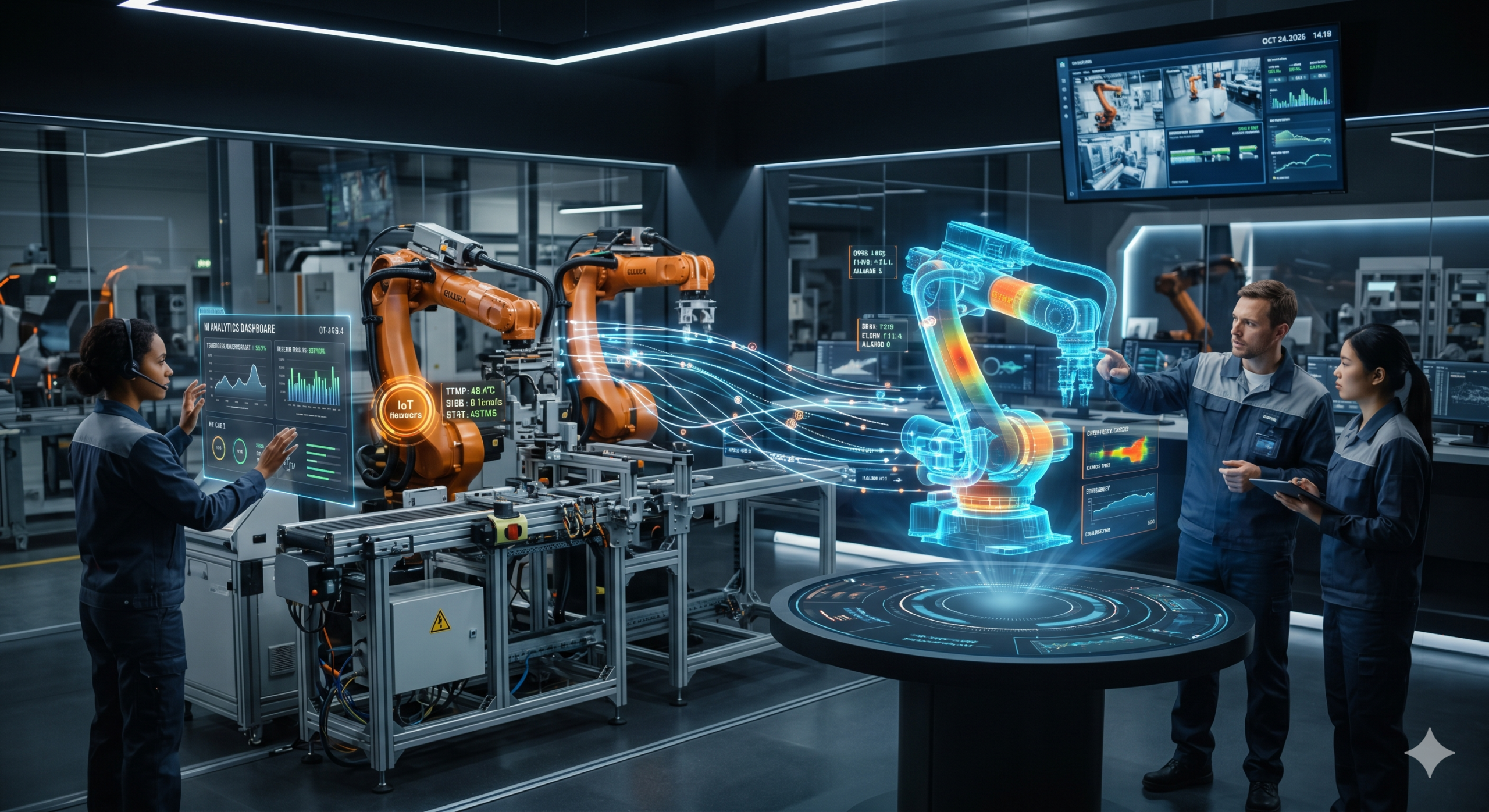
AI agents in business are rapidly transforming how organizations operate, compete, and innovate. These intelligent systems go beyond traditional automation by making decisions, learning from data, and acting independently to achieve defined goals. In 2026, companies across industries are deploying AI agents to streamline workflows, reduce costs, and enhance customer experiences.
Unlike basic software tools, AI agents can perceive their environment, process information, and take action without constant human intervention. As a result, businesses are shifting toward more autonomous operations powered by artificial intelligence.
This guide explains how AI agents work, the technologies behind them, real-world use cases, benefits, challenges, and future trends.
What Are AI Agents?
Modern organizations are increasingly adopting AI agents for business to automate workflows, make decisions, and execute tasks across multiple systems with minimal human intervention. AI agents are software systems designed to perform tasks autonomously by analyzing data, making decisions, and executing actions. These agents can operate independently or collaborate with humans and other systems.
Key characteristics include:
- Autonomy: Ability to act without direct supervision
- Adaptability: Learning from data and improving over time
- Goal-oriented behavior: Designed to achieve specific objectives
- Interaction: Communicating with users, systems, or environments
AI agents can range from simple rule-based bots to advanced systems powered by machine learning and large language models.
How AI Agents Work
AI agents follow a structured process to function effectively.
1. Perception
Agents collect data from various sources such as sensors, databases, or user inputs.
2. Decision-Making
Using AI models, the system analyzes data and determines the best course of action.
3. Action Execution
The agent performs tasks, such as responding to customers, adjusting operations, or triggering workflows.
4. Learning and Optimization
Through machine learning, agents continuously improve their performance based on feedback and historical data.
Core Technologies Behind AI Agents
Artificial Intelligence and Machine Learning
AI and machine learning enable agents to analyze data, recognize patterns, and make intelligent decisions.
Natural Language Processing (NLP)
NLP allows agents to understand and respond to human language, making them useful for customer service and communication.
Cloud Computing
Cloud platforms provide the scalability needed to run AI systems efficiently.
Data Analytics
Analytics tools process large datasets, enabling agents to generate insights and predictions.
APIs and Integration Platforms
APIs connect AI agents with other business systems, enabling seamless automation.
Types of AI Agents in Business
Reactive Agents
Respond to specific inputs without memory or learning capabilities.
Model-Based Agents
Use internal models to make more informed decisions.
Goal-Based Agents
Focus on achieving specific objectives using planning and reasoning.
Learning Agents
Continuously improve performance using machine learning.
Multi-Agent Systems
Multiple agents working together to solve complex problems.
Real-World Applications
Customer Service Automation
AI agents handle customer inquiries through chatbots and virtual assistants, improving response times and reducing costs.
Sales and Marketing
Businesses use AI agents to:
- Personalize marketing campaigns
- Analyze customer behavior
- Generate leads
Finance and Accounting
AI systems automate:
- Fraud detection
- Risk analysis
- Financial forecasting
Supply Chain Management
AI agents optimize logistics by:
- Predicting demand
- Managing inventory
- Improving delivery efficiency
Human Resources
HR teams use AI agents for:
- Resume screening
- Employee engagement
- Workforce analytics
Benefits of AI Agents in Business
Increased Efficiency
Automation reduces manual work and speeds up processes.
Cost Reduction
AI agents minimize operational costs by handling repetitive tasks.
Improved Decision-Making
Data-driven insights lead to better business decisions.
Scalability
Businesses can scale operations without proportional increases in workforce.
Enhanced Customer Experience
AI agents provide fast, personalized, and consistent service.
Challenges of Implementing AI Agents
Data Quality Issues
Poor data can lead to inaccurate decisions.
Integration Complexity
Connecting AI systems with existing infrastructure can be challenging.
Security Risks
AI systems must be protected from cyber threats.
Ethical Concerns
Issues such as bias and transparency need to be addressed.
Skills Gap
Organizations need skilled professionals to develop and manage AI systems.
AI Agent Architecture
A typical AI agent system includes:
Input Layer
Collects data from users and systems.
Processing Layer
Uses AI models to analyze data.
Decision Layer
Determines actions based on analysis.
Execution Layer
Carries out tasks and processes.
Feedback Layer
Improves performance through learning.
Future Trends in AI Agents
Autonomous Business Operations
AI agents will manage entire workflows with minimal human intervention.
Integration with Digital Ecosystems
Agents will interact seamlessly with multiple platforms and services.
Advanced Personalization
AI will deliver highly tailored experiences for customers.
Collaboration Between Humans and AI
AI agents will augment human capabilities rather than replace them.
Regulation and Governance
Governments will introduce frameworks to ensure responsible AI use.
Best Practices for Implementation
Start with Clear Objectives
Define goals before deploying AI systems.
Ensure Data Quality
Use accurate and reliable data sources.
Invest in Security
Protect systems from cyber threats.
Focus on Integration
Ensure compatibility with existing systems.
Monitor and Optimize
Continuously evaluate performance.
Conclusion
AI agents in business are redefining how organizations operate by introducing intelligent automation, real-time decision-making, and scalable solutions. As technology continues to evolve, these systems will become more advanced, enabling businesses to operate more efficiently and competitively.
Organizations that adopt AI agents early will gain a significant advantage by improving productivity, reducing costs, and enhancing customer experiences. The future of business is increasingly autonomous, and AI agents are at the center of this transformation.