
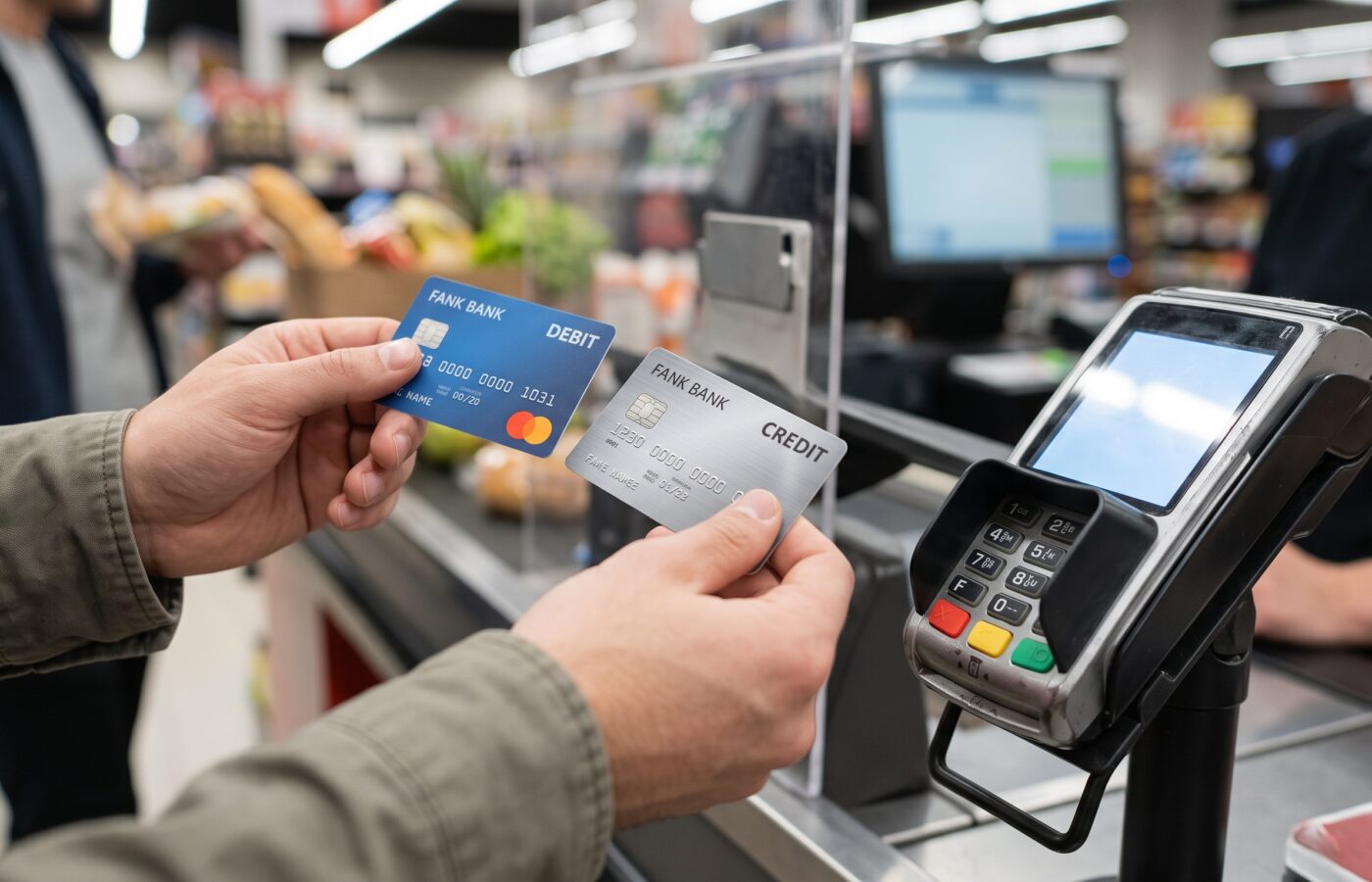
Debit Card vs Credit Card: When to Use Each

A woman I worked with a few years back, I’ll call her Marisol, came into our first session with her mind already made up on the debit card vs credit card question. Credit cards were something she simply did not trust. In her twenties she had run up a balance, spent most of her thirties paying it off, and when the last payment cleared she cut every card in half and promised herself she would live on debit for good. I respected that. It took real discipline.
Then one Friday evening her debit card was skimmed at a gas pump. By Sunday, close to nine hundred dollars had left her checking account. Her rent payment was set to go out on Monday. The bank did open a claim and she eventually got the money back, but for about ten days she was juggling late fees, an angry landlord, and a grocery budget that had vanished overnight.
The Debit Card vs Credit Card Question I Hear Almost Every Week
When she came back to my office, she asked me a question I hear in some form almost every week: “So was I wrong? Should I be using credit cards after all?”
My honest answer was that she wasn’t wrong. She was using one tool for every job. The real debate over debit card vs credit card is not about which one is good and which one is bad. It’s about knowing what each one does well, where each one can hurt you, and matching the card to the situation in front of you.
That is what I want to walk through here, the same way I would with a client sitting across my desk.
Why the Debit Card vs Credit Card Debate Is Usually Framed Wrong
Most articles on this topic set it up like a contest. Debit is “safe,” credit is “dangerous.” Or credit is “smart” and debit is for people who don’t understand rewards. Both framings miss the point.
A debit card is a way to spend money you already have. A credit card is a short loan you agree to repay. Those are two very different financial products that happen to look identical in your wallet. The plastic is the same size, the chip is in the same place, and the checkout terminal treats them almost the same way. That surface similarity is exactly why people get into trouble with them.
As a counselor, I care about three things when a client weighs a debit card vs credit card for a purchase:
- Protection. If something goes wrong, how exposed are you?
- Cost. What will this payment method actually cost you over time?
- Behavior. Does this method help you stick to your plan or quietly pull you off it?
Keep those three questions in mind. Every recommendation below comes back to them.
Americans clearly use both. The Federal Reserve’s most recent triennial payments study found that debit cards still make up most card payments, but credit card payments grew faster than debit for the first time in almost a decade. So people are already mixing the two. The goal is to mix them on purpose.
What Actually Happens When You Swipe a Debit Card vs Credit Card
When you pay with a debit card, the money comes out of your checking account, usually within a day or two, sometimes instantly. There’s no bill later. What you spent is simply gone from your balance.
When you pay with a credit card, the card issuer pays the merchant. You now owe the issuer that amount. At the end of your billing cycle, you get a statement. If you pay the full statement balance by the due date, you typically pay no interest at all. Otherwise, interest is charged on what’s left, and it usually starts growing from there.
That gap between buying and paying is the whole story. For a disciplined person, that gap is a buffer of free time and protection. Someone who is stretched thin, however, can find that same gap becoming a trap, because it lets spending run ahead of income without any immediate signal that something is off.
I’ve seen both outcomes many times. The card itself doesn’t decide which one you get. Your habits and your situation do.
Debit Card vs Credit Card Fraud Protection: Whose Money Is Missing?
This is the area where I push back hardest on the idea that debit is automatically the “safe” choice.
Debit and credit cards are covered by two different federal laws in the United States. Credit cards fall under the Fair Credit Billing Act. Debit cards fall under the Electronic Fund Transfer Act. These laws treat you very differently when fraud happens, and this is where the debit card vs credit card gap is widest.
What the Law Says About Credit Cards
With a credit card, your liability for unauthorized charges is capped at $50, and if only your card number is stolen rather than the physical card, you owe nothing for the fraudulent use. In practice, most major issuers waive even that $50 through their own zero liability policies.
What the Law Says About Debit Cards
With a debit card, your protection depends heavily on how fast you act. If you report a lost or stolen card before anyone uses it, you owe nothing. Report it within two days and your liability is limited to $50. Wait up to 60 days and that limit rises to $500, and beyond that window your exposure is essentially unlimited, according to the Federal Trade Commission.
Why the Missing Money Matters More Than the Law
But the legal limits aren’t even the biggest difference. The bigger difference is whose money is sitting in limbo while the investigation happens.
When a thief uses your credit card, the money that’s missing belongs to the bank. You dispute the charge, it’s usually removed or held while they investigate, and your checking account is untouched. Your rent clears. The car payment clears. Life goes on.
When a thief uses your debit card, the money that’s missing is yours. It’s gone from your checking account right now, today, while the bank works through its process. That’s what happened to Marisol. She did nothing wrong, and she still spent a week and a half scrambling.
One way I’ve seen this put that stuck with me: someone with your credit card number is stealing from the bank, while someone with your debit card number is stealing from you.
That’s why my first rule with nearly every client is this: don’t type your debit card number into websites if you can avoid it. Online merchants get breached. Card numbers leak. If one leaks, you want it to be a number that isn’t wired directly to the account that pays your bills. Fake emails posing as your bank are another common way numbers get stolen, so it pays to know how to spot a phishing email.
Credit History: Where a Debit Card Falls Short of a Credit Card
Here’s a quiet cost of living entirely on debit that almost nobody notices until it matters: debit cards do nothing for your credit history.
You can use a debit card responsibly for twenty years and it won’t show up on your credit report once. Your bank doesn’t report it, because you’re not borrowing anything. On this point, the debit card vs credit card comparison isn’t even close.
When a Thin Credit File Comes Back to Bite
That might sound fine until you apply for a mortgage, an auto loan, an apartment, or sometimes even certain jobs or insurance policies. Lenders want to see that you’ve handled borrowed money before. A thin or empty credit file can mean higher interest rates, larger deposits, or a flat “no.”
I’ve had clients in their forties with strong incomes, real savings, and zero debt who were surprised to find their credit scores were mediocre or that they didn’t have a usable score at all. They’d done everything “right” by the old advice to avoid credit, and it cost them when they finally needed a home loan.
Building Credit Without Taking on Debt
A credit card used lightly and paid in full every month is one of the simplest ways to build a solid credit history. Payment history is the biggest single factor in a FICO score, and the amount you owe relative to your limits matters a great deal as well. A card with a small recurring bill on it, paid automatically and in full, quietly builds both.
You don’t need to love credit cards to use one this way. All it takes is one card, a small predictable charge, and autopay.
The Real Cost of Carrying a Balance
Now for the other side, because I’d be doing you a disservice if I only praised credit cards.
Credit card interest is expensive. Not a little expensive. Seriously expensive. Across all accounts, the average APR sat just under 21 percent at the end of 2025, and Americans paid an estimated $181 billion in credit card interest that year, more than double what they paid in 2021.
What Minimum Payments Really Cost
Let me make that concrete. Bankrate ran the numbers on an average balance of about $6,500 at roughly 20 percent interest, paying only the minimum each month, and found it would take more than 18 years to pay off, with about $9,400 in interest along the way. That’s more interest than the original balance.
I’ve sat with families where that math wasn’t hypothetical. It was their actual life. The purchases on that card were long forgotten. The kids’ shoes had been outgrown, the vacation photos were years old, but the payments were still there every month.
The One Rule That Decides Everything
This is why the rule for credit cards is so simple and so unforgiving: if you can’t pay the statement in full, the card stops being a convenience and becomes a loan at one of the highest interest rates you will ever see.
If you’re already carrying a balance, my advice on debit card vs credit card use changes. Stop adding new purchases to that card. Switch your day to day spending to debit while you pay the balance down. The protection and rewards benefits of credit simply aren’t worth it while you’re paying 20 percent or more on old debt.
Holds and Deposits: Debit Card vs Credit Card at Hotels and Pumps
There’s a practical issue that trips people up constantly: authorization holds.
When you check into a hotel, rent a car, or sometimes pay at the pump, the merchant often places a temporary hold on your card for more than the actual purchase. It’s their way of making sure funds will be there for incidentals, extra fuel, or damage.
On a credit card, that hold just reduces your available credit for a few days. Annoying, but rarely a problem.
How Holds Hit Your Checking Account
On a debit card, that hold freezes real money in your checking account. A rental car company might hold several hundred dollars for a week or more. Hotels might hold a nightly deposit on top of the room rate. If you’re traveling on a tight budget, those holds can push you close to zero, trigger declined transactions, or even cause an overdraft when a bill posts in the middle of your trip.
Some rental companies also require a credit check or extra documentation if you pay with debit, and a few won’t accept debit at all for certain vehicles.
My standing advice: use a credit card for hotels, rental cars, and travel bookings, even if you pay that card off the moment you get home. It keeps your checking account clean and your trip less stressful.
Rewards: My Honest Take on Debit Card vs Credit Card Perks
Rewards are where a lot of credit card advice gets carried away.
Yes, cash back and travel points are real. A card that gives you 1.5 or 2 percent back on everything can return a few hundred dollars a year for an average household. That’s not nothing.
But I tell every client the same thing: rewards are a bonus, not a reason. If chasing points leads you to spend even slightly more than you otherwise would, or to carry a balance for even a month or two, the interest will wipe out every point you’ve earned and then some. Two percent back does not win a fight against 21 percent interest.
There’s also a quieter behavioral risk. Research and everyday experience both suggest that people tend to spend more freely with credit than with cash or debit, because paying later feels less painful than paying now. Rewards can deepen that effect. You start to feel like spending is “earning” you something.
If you pay in full every month and your spending doesn’t change, take the rewards and enjoy them. Unsure about either of those conditions? Then the rewards aren’t worth the risk. A plain card with no annual fee is perfectly fine.
When I Tell Clients to Use a Debit Card Instead of a Credit Card
Here’s where debit clearly earns its place:
ATM withdrawals. This is what debit cards were built for. Never use a credit card at an ATM. Cash advances usually carry a separate, higher interest rate, an upfront fee, and no grace period, so interest starts the same day.
When you’re paying down credit card debt. If you carry a balance, debit becomes your main spending tool until that balance is gone. You don’t want new purchases piling onto a card that’s already costing you interest.
When you’re rebuilding spending habits. Some people genuinely need the immediate feedback of seeing their balance drop. If credit cards have hurt you before, there’s no shame in sticking with debit while you build a stronger budget. Just be choosy about where you use it.
Small, in person purchases at places you trust. Your regular grocery store, the pharmacy, the coffee shop down the street. Using your PIN at a trusted terminal is fairly low risk.
When you don’t have reliable access to credit. Not everyone qualifies for a good card, and that’s fine. A debit card, used carefully, can handle nearly all of daily life.
When I Tell Clients to Use a Credit Card Instead of a Debit Card
And here’s where credit is usually the better choice, as long as you pay it in full:
Online shopping and subscriptions. This is the single biggest one. Card numbers leak online more than anywhere else, as NerdWallet’s comparison of online safety points out. Keep your debit number out of online accounts and stored payment profiles.
Gas pumps and unattended terminals. Skimmers are far more common at pumps, parking machines, and other unstaffed spots. If someone is going to steal a number, let it be a credit number.
Travel, hotels, and rental cars. Holds and deposits land on your credit line instead of freezing your cash.
Large purchases. Credit cards often come with stronger dispute rights, and some offer purchase protection or extended warranties. If a big ticket item arrives broken or never shows up, disputing a credit charge is usually smoother than chasing a debit refund.
Building or maintaining credit. One recurring bill, such as a phone plan or streaming service, on autopay in full, does a lot of quiet work for your credit file.
Anywhere you’re unsure about the merchant. New website, unfamiliar vendor, a booking you might need to cancel. Credit gives you more room if things go sideways.
The Psychology Behind Debit Card vs Credit Card Spending
I’ve been doing this work long enough to know that most money problems aren’t math problems. They’re behavior problems wearing math’s clothes.
Some of my clients spend exactly the same amount no matter how they pay. For them, credit cards are almost purely beneficial: more protection, a better credit history, a little cash back.
Others spend noticeably more when the money doesn’t leave their account right away. They’re not reckless or careless. It’s simply how they’re wired, and it’s very common. Used for everything, a credit card can slowly create a gap for these clients between what they think they spent and what they actually spent.
The Question to Ask Yourself First
So before you settle the debit card vs credit card choice for yourself, I’d encourage you to be honest about one question: When I used a credit card in the past, did my balance get paid in full every single month without stress?
If the answer is yes, you can lean on credit more heavily. An answer of “mostly” or “not really” means you should start with a narrower setup and expand it only after you’ve proven to yourself that it works.
There’s no moral judgment here. Knowing your own patterns is just good planning.
A Simple Debit Card and Credit Card Setup I Give Most Clients
After years of trial and error with real households, here’s the arrangement I recommend most often. It’s not fancy, and that’s the point.
One credit card for protected spending. Use it for online purchases, subscriptions, gas, travel, and anything large. Set autopay to cover the full statement balance, not the minimum. Check the app once a week.
One debit card for cash and trusted daily spending. Use it at ATMs and for in person purchases at places you trust if you prefer to see the money leave right away.
A spending cap that matches your checking account. Never put more on the credit card in a month than your checking account could cover today. If you’d struggle to pay the statement in full, you’re spending too much on it.
Alerts on both. Turn on transaction alerts for every purchase over a small amount. Fraud caught in hours is a nuisance. When it’s caught in weeks, it can be a crisis, especially on debit.
How It Worked Out for Marisol
Marisol eventually settled into almost exactly this. She opened a simple no fee credit card, put her phone bill and her online orders on it with autopay, and kept her debit card for groceries and cash. A year later, she had a credit score she’d never had before, and her checking account hadn’t been touched by a single fraudulent charge. She told me the debit card vs credit card decision felt less like giving in to credit and more like finally using the right tool for each job.
Debit Card vs Credit Card in Everyday Situations
Traveling abroad. Use a credit card with no foreign transaction fee for purchases, and a debit card only to pull local cash from bank ATMs. Tell both issuers you’re traveling if your bank still asks for that. Always choose to be charged in the local currency when a terminal asks; the conversion offered at the register is usually worse.
Emergencies. A credit card can be a reasonable bridge in a genuine emergency, but it’s a costly one. The better plan is a cash emergency fund, even a small one, sitting in savings. Think of the credit card as a backup to the backup, not the plan.
Splitting bills or paying friends. Payment apps linked to debit are usually fine for small amounts between people you know. Be wary of using any app to pay strangers, because those transfers are often hard or impossible to reverse.
Buy now, pay later offers. These are a third category entirely, and they deserve their own conversation. My short version: they make it easy to stack several small loans you lose track of. Treat them with at least as much caution as a credit card.
The Bottom Line on Debit Card vs Credit Card Use
The question isn’t really debit card vs credit card. It’s which card fits this purchase, in this situation, for the person you actually are.
Credit cards offer better fraud protection, help build your credit history, and handle travel and online spending more gracefully, but only if you pay them in full. Debit cards keep spending tied directly to the money you have, which is valuable for anyone paying down debt or rebuilding habits, but they leave your own cash exposed when things go wrong.
Use each one for what it does best. Keep your debit number off the internet. Never carry a credit balance you can’t clear. And if you’re not sure which side of that line you fall on, sit down with a financial counselor and look at your last few statements together. The answer is usually right there in the numbers.
Debit Card vs Credit Card FAQs
Is a debit card or a credit card safer to use online?
A credit card is generally safer. Credit cards are covered by the Fair Credit Billing Act, which caps your liability and keeps stolen money off your checking account while the issuer investigates. Debit fraud pulls money straight from your account. See the NerdWallet guide on which card is safer online.
Does using a debit card build my credit score?
No. Debit card activity isn’t reported to the credit bureaus because you aren’t borrowing. To build credit, you need a credit account such as a credit card or loan, paid on time. Learn what goes into a score at myFICO.
What should I do if my debit card is lost or stolen?
Report it to your bank immediately. Under the Electronic Fund Transfer Act, your liability grows the longer you wait, so the first two business days matter most. The FTC’s guide to lost or stolen cards explains the steps and limits.
Should I ever use a credit card at an ATM?
Almost never. Cash advances typically carry a fee, a higher interest rate, and no grace period. Use your debit card for cash withdrawals instead.
Is it worth using a credit card just for the rewards?
Only if you pay the full balance every month and your spending doesn’t rise because of the card. Average credit card interest rates are above 20 percent, which easily erases any rewards. See Bankrate’s analysis of credit card interest costs.
Why do hotels and rental car companies prefer credit cards?
They place temporary holds for deposits and incidentals. On a credit card that hold only reduces available credit, but on a debit card it freezes real money in your checking account, sometimes for over a week.
Which do Americans use more, a debit card or a credit card?
Debit cards still account for most card payments by number, but credit card use has been growing faster. Read the Federal Reserve’s 2025 payments study findings, or browse the national payment volume data.
References
- Federal Reserve Board. Federal Reserve issues initial findings from its 2025 triennial payments study. July 1, 2026.
- Federal Reserve Board. National Payment Volumes, Top Line Data (CY 2015 to 2024).
- NerdWallet. Credit Card vs. Debit Card: Which Is Safer Online?
- Federal Trade Commission. Lost or Stolen Credit, ATM, and Debit Cards.
- Money Crashers. Credit Cards Offer Stronger Fraud Protection Than Debit Cards.
- Bankrate. Will credit card debtors catch a break with the expected Fed rate cut?
- SuperMoney. 2026 Consumer Credit Card Industry Study.
- myFICO. What’s in my FICO Scores?