
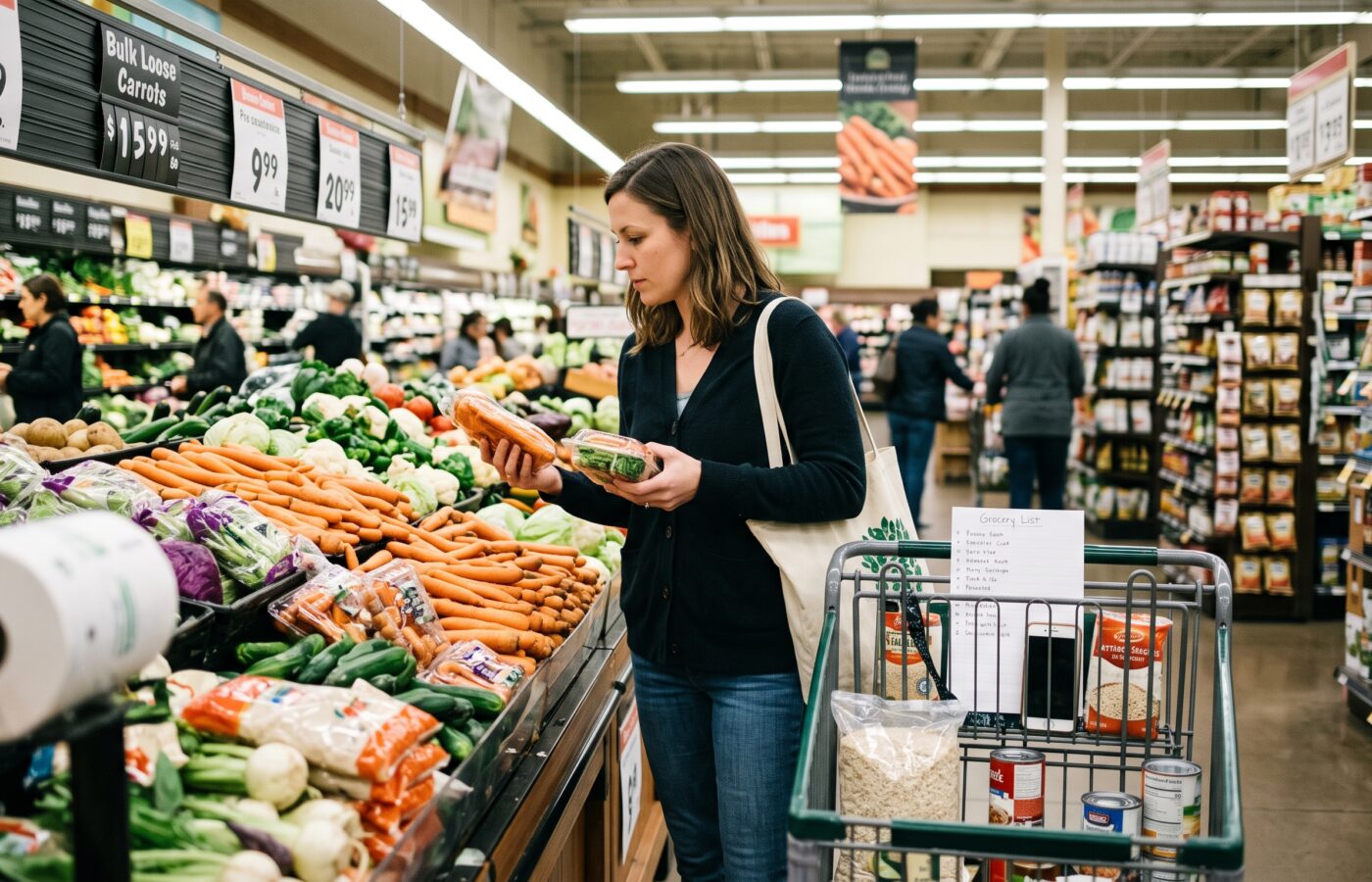
15 Practical Ways to Save Money on Groceries

The grocery line is where I see budgets quietly fall apart, and it is also where I find the most reliable ways to save money on groceries without anyone at home feeling deprived. Rent is fixed. The car payment is fixed. But food? Food is the one category that moves every single week, and because it moves, most people never really know what they spend on it.
I work as a financial coach and Accredited Financial Counselor (AFC®), and when a new client sits down with me, the grocery category is almost always the first place we find real money. Not because people are careless. It is because food spending is made of hundreds of small decisions, and small decisions are easy to make on autopilot.
So this is not a list of extreme couponing tricks or a plan to live on rice for a month. These are the ways to save money on groceries that I actually use with clients, the ones that hold up after the first enthusiastic week is over.
Why Ways to Save Money on Groceries Matter More in 2026
If you feel like the grocery bill has been climbing faster than your paycheck, you are not imagining it. According to the USDA’s Economic Research Service, food prices rose 24 percent between 2020 and 2024, and 77 percent of Americans say groceries are where they have felt price increases the most.
The picture for 2026 is more mixed. The USDA Economic Research Service now projects that grocery prices will rise about 2.4 percent this year, but the categories are moving in very different directions: eggs are expected to drop sharply, dairy is roughly flat, while sugar and sweets, fresh vegetables, and seafood are climbing faster. Beef in particular has stayed stubborn. Retail beef and veal prices were running nearly 13 percent above the prior year in recent data, driven by tight cattle supplies and steady demand.
What that tells me as a coach is simple. A flat “spend less on food” goal does not work. The best ways to save money on groceries start with knowing which parts of your cart are getting expensive, then adjusting there while leaning harder on the categories that are holding steady or getting cheaper.
There is one more piece of good news. USDA economists have noted that eating at home is becoming relatively cheaper compared to eating out, with restaurant prices expected to rise faster than grocery prices. Every dollar you move from takeout to your own kitchen now stretches further than it did a few years ago.
Here is how to make that happen.
1. Audit the Last 30 Days Before You Cut Anything
Most people start saving money by cutting. I start by looking.
Pull every grocery receipt from the last month, or log into your bank or card app and filter by merchant. Add it up. Then go one step further and sort the spending into rough buckets: produce, meat and protein, dairy, snacks, drinks, household items, and “I have no idea what this was.”
The first time a client does this, there is almost always a surprise. One couple I worked with was convinced their problem was the price of meat. When we sorted their receipts, they were spending more on bottled drinks and snack packs than on chicken and beef combined. They did not need a new meal plan. What they needed was a different drink habit.
You cannot fix a number you have never seen. Thirty minutes with your receipts will show you which ways to save money on groceries will matter most in your house, more than any list of tips, including this one.
2. Set a Weekly Grocery Number, Not a Monthly One
A monthly grocery budget sounds responsible, but it fails for a predictable reason. By week three, you have no idea how much is left, and by week four you are either starving the budget or blowing past it.
Divide your monthly target by four and treat that as your weekly limit. A weekly number is small enough to hold in your head while you shop. If your weekly number is $150 and the cart looks like it is heading toward $190, you know right there in the aisle, not three weeks later on a statement.
If you are not sure what number is realistic, the USDA publishes monthly food plan costs at four levels, from Thrifty to Liberal, broken down by age and household size. I use these with clients as a reality check. If your household is spending well above the Liberal plan, there is room to tighten. Already near the Thrifty plan? Then the goal shifts from cutting to protecting what you have.
3. Shop Your Own Kitchen First
Before you write a single item on a list, open the pantry, the fridge, and the freezer.
Consumer Reports’ Brian Vines recommends this exact step, starting with what you already have before you make a list, as a way to cut costs and depend less on credit. It sounds obvious. Almost nobody does it consistently, which is why it remains one of the most overlooked ways to save money on groceries.
Here is what I see when clients skip it. They buy a second jar of cumin because they forgot the first. They buy chicken thighs while a pack of ground turkey sits in the back of the freezer. Over a year, those duplicate purchases add up to a meaningful amount of money.
I ask clients to build at least two or three meals each week around food already in the house. That one rule shrinks the shopping list before you ever leave home.
4. Plan Meals Around Sales, Not Sales Around Meals
Most people decide what they want to eat, then go buy it at whatever price the store is charging. Flip that.
Look at the weekly circular or the store app first. See what proteins and produce are on sale, then build your meals from there. If pork shoulder is on sale and chicken breast is not, this is a pork week.
Consumer Reports nutritionist Amy Keating suggests going beyond just a list and being realistic about the week ahead, including choosing meals that make good leftovers or freeze well so you avoid overbuying and waste.
That word “realistic” matters. I have watched clients plan seven elaborate home cooked dinners, then work late on Tuesday and order pizza anyway. Plan for the life you actually live. If you know Thursday is chaos, plan a leftover night or a simple freezer meal. A plan that fits your real week is the one that saves money.
5. Write the List by Store Layout and Treat It as a Contract
A shopping list only works if it controls what you buy.
Organize your list in the order you walk the store: produce, then meat, then dairy, then the center aisles. This keeps you moving with purpose and cuts down on wandering, and wandering is where impulse purchases live.
Then treat the list like a contract with your future self. If something is not on it, it does not go in the cart unless it replaces something that is. I give clients one small exception: a “flex” line of about $5 to $10 for a genuine sale or a small treat. Having a planned exception makes it easier to stick with the rest of the rules.
And yes, the old advice holds. Do not shop hungry. A hungry shopper is a generous shopper, and the store knows it.
6. Read the Unit Price, Every Time
The big number on a shelf tag tells you what an item costs. The small number tells you whether it is a good deal.
Unit pricing shows the cost per ounce, per pound, or per count. It lets you compare a 12 ounce box with a 20 ounce box, or a name brand with a store brand, on equal footing. Consumer Reports has long pointed out that bigger is not always cheaper, which is exactly why the unit price matters.
I have seen “family size” packages that cost more per ounce than the regular size sitting right next to them. Sale prices on a smaller package can still lose to the everyday price of a larger one. The only way to know is to read the small print. After a few trips, it becomes a habit you barely notice.
7. Store Brands: One of the Biggest Ways to Save Money on Groceries
If I could only give one grocery tip to a new client, it might be this one.
Consumer Reports found that switching from name brands to store brands on staples such as orange juice, coffee, cheese, and yogurt can save anywhere from 30 to 70 percent. Its testing also found many store versions sell for half the price or less, and some taste just as good as, or better than, the name brand.
Store brands are often made in the same kind of facilities, held to the same safety rules, and sometimes produced by the same manufacturers as the brands you know.
My suggestion: start with five items you buy every week. Flour, sugar, canned tomatoes, frozen vegetables, and cereal are easy wins. Try the store version once. If your household cannot tell the difference, make the switch permanent. Should a specific item truly disappoint, go back to the brand you like for that one product. You do not have to switch everything to save a lot.
8. Pick Your Store Based on Your Basket
Loyalty to one grocery store is expensive if that store is not built for how you shop.
In Consumer Reports’ recent price comparison, Costco, BJ’s, Aldi, and Lidl ranked among the cheapest places to buy groceries, each coming in below Walmart on price.
That does not mean everyone should switch to a warehouse club. A family of five that cooks most meals will likely get real value from bulk pricing. For a single person in a small apartment, bulk buying may waste more than it saves. A discount grocer with a limited selection can be perfect for staples but frustrating for specialty items.
What I usually recommend is a two store rhythm. Buy your staples at the cheapest store in your area, and keep your favorite store for the handful of items it does best. Just do not let it turn into five stores a week. Gas and time are costs too.
9. Buy in Bulk Only What You Will Actually Finish
Bulk buying is one of the most misunderstood ways to save money on groceries.
Buying a large quantity at a low unit price only saves money if you use all of it. A giant bag of spinach that goes slimy halfway through is not a bargain. It is a donation to your trash can.
Good bulk candidates are shelf stable or freezable items your household uses steadily: rice, oats, dried beans, pasta, canned goods, frozen vegetables, toilet paper, and cooking oil if you go through it quickly. Poor candidates are fresh produce, condiments you use rarely, and anything new you have never tried before.
Before a bulk purchase, I ask clients one question: “Will this be gone before it goes bad?” If the honest answer is “probably not,” buy the smaller size.
10. Make Your Protein Work Harder
Protein is usually the most expensive part of the cart, and with beef prices where they are, it is the first place I look for savings.
Giving up meat isn’t required. You just have to stop making it the whole plate.
Consumer Reports points out that dried beans, peas, and lentils cost far less than animal proteins while delivering plenty of nutrition, and that eggs remain a nutritious, relatively affordable staple. With egg prices now falling sharply from their recent highs, eggs are a smarter buy than they have been in a while.
A few practical ways to save money on groceries in the protein aisle that I share with clients:
- Stretch ground meat with lentils or black beans in tacos, chili, and pasta sauce. Most families do not even notice a 50/50 mix.
- Buy larger, cheaper cuts like whole chickens or pork shoulder and portion them at home. You can also buy a less expensive large roast and ask the butcher to cut it for you.
- Try one or two meatless dinners a week. Consumer Reports estimates that going meatless can save close to a thousand dollars a year.
11. Treat Your Freezer Like a Savings Account
Your freezer may be the most underrated money tool in your house.
When you find a real sale on meat, bread, butter, or seasonal produce, the freezer lets you lock in that price for weeks or months. Consumer Reports estimates that a family of four can save around $2,000 a year by freezing foods bought on sale or in season and planning meals around them.
The freezer also rescues food you would otherwise throw away. Bread that will not get eaten before it goes stale, bananas that are going brown, leftover soup that nobody wants three nights in a row: all of it can go in the freezer and come out later as a meal.
The one rule: label everything with what it is and the date. A freezer full of mystery bags is just a slower way to waste food.
12. Stack Loyalty Programs and Digital Coupons, Without Chasing Them
I am not going to tell you to spend Sunday afternoon clipping coupons. For most of my clients, that is not a realistic habit.
But the easy stuff is worth doing. Joining your store’s loyalty program can unlock extra discounts on top of the weekly sales. Most stores now load digital coupons directly into their apps, which takes a couple of minutes before you shop. Some stores even let you combine their own discounts with manufacturer coupons for bigger savings.
Here is the caution I give everyone: a coupon is only a saving if you were going to buy the item anyway. If a deal convinces you to buy something that was never on your list, you did not save money. You spent money you had not planned to spend, at a discount. I have seen people proudly announce they “saved $40” on a trip where they spent $60 more than usual. Coupons are useful ways to save money on groceries only when your list stays in charge.
13. Cut Food Waste, the Most Overlooked of All Ways to Save Money on Groceries
This is the tip that surprises clients the most, because it does not feel like spending at all.
The USDA estimates that between 30 and 40 percent of the U.S. food supply goes to waste, based on its estimate of 31 percent loss at the retail and consumer levels. One researcher studying household waste estimated that a typical household throws away roughly $1,500 to $2,000 worth of food every year.
Think about that. For many families, cutting waste in half would save more than any coupon strategy ever could.
A big part of the problem is confusion about date labels. The USDA notes that misunderstanding the dates printed on food leads people to throw away food that is still wholesome, since manufacturers typically use those dates to signal best quality. Outside of infant formula, “best if used by” is usually about flavor and texture, not safety. Use your eyes and nose, and check the USDA’s food product dating guidance when in doubt.
Two more habits help a lot. Store groceries properly so produce lasts, and eat the delicate items like salad greens and berries first, saving sturdier foods like carrots and frozen vegetables for later in the week. I also suggest a weekly “use it up” night where dinner is built from whatever is close to the edge.
14. Make Fewer Trips to the Store
Every trip to the grocery store is an opportunity to spend money you did not plan to spend.
The “quick run” for milk almost never ends with just milk. It ends with milk, a bag of chips, a rotisserie chicken, and a bottle of something cold for the drive home. I have had clients track their quick trips for a month and find they added up to as much as a full weekly shop.
Aim for one main grocery trip a week, with maybe one small top up for fresh items if you truly need it. Keep backups of the things that trigger emergency runs: shelf stable milk, a loaf of bread in the freezer, extra eggs. When the house is stocked, the “quick run” stops being necessary.
15. Keep Groceries Off High Interest Credit
This last one is less about the price of food and more about what it really costs you.
A recent Urban Institute analysis found that over one in four working age adults struggled to pay off grocery purchases they had put on a credit card in the past year, and nearly one in 10 had used Buy Now, Pay Later for groceries, with many falling behind.
When you carry a balance, a $150 grocery trip does not cost $150. With interest, it can cost a lot more, and you are still paying for it long after the food is gone. That is one of the most painful patterns I see in my practice, because it turns a weekly necessity into lasting debt.
If you use a credit card for rewards and pay it off in full every month, that is fine. Carrying a balance changes things: switch groceries to debit or cash until the balance is gone. (For more on choosing the right card, see debit card vs credit card.) Paying with money you already have creates a natural limit. When the weekly grocery money is spent, you are done for the week, and you have not borrowed against next month to get there.
If you are already in a spot where groceries are going on credit just to make it to payday, please talk to someone. A nonprofit credit counselor or an Accredited Financial Counselor can help you build a plan, and local food banks and programs like SNAP exist for exactly these seasons. There is no shame in using them.
Putting These Ways to Save Money on Groceries Together
You do not need all 15 of these ways to save money on groceries to make a difference. In my experience, people who try to change everything at once tend to quit within a month.
Start with three. If I had to choose for you, I would pick the receipt audit, the switch to store brands, and cutting food waste. Those three alone can shrink a grocery bill noticeably without making anyone in the house feel deprived.
Once those feel automatic, add another. Then another. Over a few months, these small habits build into a grocery budget that feels steady instead of stressful. And the money you free up can go toward the things that actually move your life forward: an emergency fund, paying down debt, or simply a little breathing room at the end of the month.
The goal is not to spend as little as possible on food. Spending on purpose is what matters.
Frequently Asked Questions About Ways to Save Money on Groceries
What are the best ways to save money on groceries?
The best ways to save money on groceries are the ones you will keep doing: auditing your receipts, setting a weekly grocery limit, switching to store brands, planning meals around sales, and cutting food waste. Small, steady habits beat dramatic changes that fade after a few weeks.
Which ways to save money on groceries work the fastest?
The quickest wins usually come from switching to store brands on staples, shopping your pantry before making a list, and cutting the food you throw away. These three changes require no extra time once they become habits, and they can lower your bill starting with your very next trip.
How much should a household spend on groceries each month?
It depends on household size, ages, and where you live. The USDA publishes monthly food plan costs at four levels (Thrifty, Low Cost, Moderate Cost, and Liberal) that you can use as a benchmark. Compare your actual spending to those plans to see whether you have room to cut. See the USDA Food Plans: Monthly Cost of Food Reports.
Are store brands one of the reliable ways to save money on groceries?
Yes, in many cases. Consumer Reports has found that many store brand products match or beat name brands on taste while costing significantly less. The best approach is to test store brands one item at a time and keep the ones your household likes.
Is buying in bulk one of the smart ways to save money on groceries?
Only if you use everything before it spoils. Check the unit price to confirm the bulk size is actually cheaper, and stick to shelf stable or freezable items your household uses regularly.
Does the “best by” date mean food is unsafe after that day?
Usually not. The USDA explains that most date labels indicate peak quality rather than safety. Infant formula is the main exception. For other foods, check for signs of spoilage and follow the USDA FSIS guidance on food product dating.
Should I use a credit card for groceries?
Only if you pay the balance in full each month. Carrying a grocery balance means paying interest on food you have already eaten. If you are carrying a balance, switching groceries to debit or cash can help you stay within a weekly limit.
Where can I get help if I cannot afford groceries?
Start with local food banks, which you can find through Feeding America, and check your eligibility for SNAP benefits. A nonprofit credit counselor or Accredited Financial Counselor can also help you build a longer term plan.
References
- USDA Food and Nutrition Service. USDA Food Plans: Monthly Cost of Food Reports
- USDA Economic Research Service. Food Price Outlook: Summary Findings
- U.S. Department of Agriculture. Food Loss and Waste
- U.S. Department of Agriculture. Food Waste FAQs
- USDA Food Safety and Inspection Service. Food Product Dating
- WSOC TV via Consumer Reports. Skip the Debt: Save at the Grocery Store With These Tips
- FOX5 Las Vegas via Consumer Reports. Consumer Reports: Save Money on Groceries
- AZFamily via Consumer Reports. Consumer Reports: Saving Money at the Grocery Store
- WTOP News. Ways to Save Money at the Grocery Store
- RFD News. Grocery Price Outlook Shows Sharp Food Category Divergence
- RFD News. Food Inflation Forecast Keeps Pressure on Household Budgets
- Farm Week. Food Price Forecast Up 3% in 2026
- Spectrum News 1. Professor Discusses American Food Waste
- Feeding America. Find Your Local Food Bank
- USDA Food and Nutrition Service. SNAP Eligibility
- AFCPE. Accredited Financial Counselor (AFC®) Certification